China Top 10 Traffic Sign Suppliers for Global Buyers
Road safety begins with signs that drivers can see, understand, and trust. The World Health Organization’s Global Status Report on Road Safety 2023 estimates 1.19 million annual road deaths worldwide. It also identifies safer road infrastructure as a vital part of prevention. These figures make traffic signs more than painted metal or reflective film.
China has developed a broad manufacturing base for road signs, gantries, posts, solar warning systems, and customized traffic equipment. Many suppliers serve municipal projects, contractors, distributors, and international infrastructure buyers. However, production scale alone does not prove reliability. Material testing, retroreflectivity, corrosion resistance, packaging, and export experience deserve equal attention. Small details matter. A scratched reflective surface can reduce visibility after rain.
This guide reviews ten Chinese suppliers for global buyers. The comparison considers product range, manufacturing capability, quality documentation, customization, lead times, and communication. Relevant benchmarks may include ASTM D4956, EN 12899, ISO 9001, and local road authority requirements. The Federal Highway Administration’s Manual on Uniform Traffic Control Devices also illustrates how sign design depends on consistent colors, symbols, placement, and visibility. Requirements differ between countries, so buyers should verify compliance before ordering. That point is easy to overlook.
The ranking is useful, but not absolute. Supplier performance can change with management, materials, and project volume. Buyers should request current test reports, production samples, inspection records, and clear warranty terms. A factory visit or independent inspection may reveal more than a polished catalog. This practical approach supports safer purchasing decisions and more dependable road infrastructure.
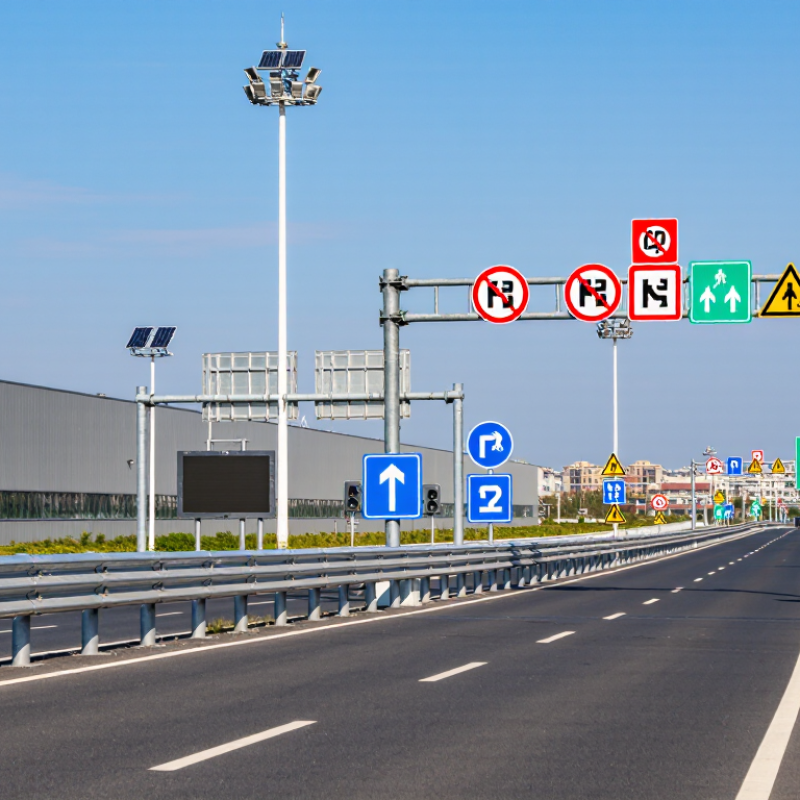
China’s traffic sign manufacturing industry is built on scale, standardized production, and project-based demand. The Ministry of Transport’s 2023 Statistical Bulletin records more than 5.4 million kilometers of roads in China. This extensive network creates steady demand for warning signs, direction boards, lane markers, and temporary work-zone signs.
Manufacturers commonly process aluminum sheets, reflective films, steel supports, and LED components. GB 5768 provides China’s core technical framework for road traffic signs, including symbols, colors, sizes, and placement. The China Statistical Yearbook 2024 also shows continued investment in transport infrastructure, although regional project quality can differ. That difference matters to global buyers.
A reliable supplier should provide material certificates, color-performance test results, salt-spray records, and clear packaging photographs. Retroreflective sheeting may look bright in daylight but perform poorly under headlights. This is easy to miss. Factory audits should check edge finishing, drilling accuracy, coating thickness, and moisture protection inside cartons. The China Traffic Yearbook reports ongoing growth in highway and urban transport assets, but production volume alone does not prove consistency. I would request samples from different batches and compare them under low-light conditions. Small defects become expensive after installation. Some supplier information remains incomplete, especially when subcontracting is involved. That deserves careful questioning.
When comparing China’s top ten traffic sign suppliers, buyers should examine evidence rather than rankings alone. A supplier’s experience should match the project’s road conditions, climate, and installation environment. Ask for completed project records, production photographs, and customer references from similar markets. Real experience is visible in details, such as clean borders, consistent colors, and accurate mounting holes.
Technical compliance deserves close attention. Review material specifications, reflective performance reports, coating thickness, and resistance to rain, heat, and ultraviolet exposure. Request samples before approving large quantities. Place one sample outdoors for several weeks, if possible. Check whether the printed symbols remain sharp after dust and moisture exposure. A factory audit can also reveal storage problems, weak quality controls, or poor packaging. These small issues often become expensive later.
Reliability includes communication and delivery discipline. Ask for a clear production schedule, inspection plan, replacement policy, and export documentation. Confirm whether the supplier can maintain the same color, size, and reflective grade across repeated orders. Independent testing adds credibility when project requirements are strict. However, no supplier is perfect. One overlooked weakness may be limited customization or slow response during peak seasons. Buyers should record these concerns and compare them against actual project risks, not attractive promises.
A practical, brand-neutral evaluation matrix for comparing China-based traffic sign suppliers before requesting quotations or samples.
| No. | Evaluation Criterion | Recommended Benchmark | Evidence to Request | Buyer Relevance | Priority |
|---|---|---|---|---|---|
| 1 | Applicable Product Standards | Products should be manufactured against the destination-market standard, such as ASTM D4956 for retroreflective sheeting or EN 12899-1 for fixed vertical road traffic signs. | Standard references, technical datasheets, test reports, and a written statement identifying the applicable product scope. | Reduces approval, installation, and public-road compliance risks. | High |
| 2 | Retroreflective Performance | The sheeting grade should match the road category, viewing distance, traffic speed, and local authority requirements. Performance should be verified through photometric testing. | Coefficient-of-retroreflection data, test method, observation angle, entrance angle, and sheeting-grade documentation. | Directly affects nighttime visibility and road-user safety. | High |
| 3 | Substrate and Corrosion Protection | Common durable options include coated aluminum or galvanized steel, selected according to climate, wind load, mounting method, and expected service life. | Substrate specification, thickness tolerance, coating details, salt-spray or corrosion-test results, and edge-treatment method. | Helps prevent premature corrosion, warping, and structural failure. | High |
| 4 | Printing and Color Durability | Graphics should remain legible after outdoor exposure, with controlled color tolerances and protection against ultraviolet radiation, abrasion, and cleaning chemicals. | Color specifications, ink or film information, UV-aging results, abrasion testing, and production samples. | Maintains sign recognition and appearance throughout the service period. | High |
| 5 | Customization Capability | The supplier should support custom sizes, symbols, languages, mounting holes, borders, colors, legends, and regional traffic-sign designs. | Engineering drawings, artwork approval process, sample approval record, and documented revision-control procedure. | Important for projects with local regulations or non-standard sign schedules. | High |
| 6 | Production Capacity and Lead Time | A capable exporter should provide a capacity-based schedule, distinguish sample and mass-production lead times, and disclose peak-season constraints. | Production plan, confirmed lead-time commitment, capacity statement, factory process flow, and previous shipment schedule records. | Supports reliable project planning and reduces installation delays. | High |
| 7 | Quality-Control System | Quality checks should cover incoming materials, dimensions, color, reflectivity, adhesion, surface finish, packing, and final quantity inspection. | Quality-control plan, inspection checklist, calibration records, nonconformance procedure, and batch traceability sample. | Improves consistency across repeated orders and large projects. | High |
| 8 | Packaging and Export Readiness | Signs should be protected from bending, scratching, moisture, and abrasion during inland transport, container loading, and international delivery. | Packaging specifications, loading photos, carton or pallet dimensions, shipping marks, and export-document checklist. | Reduces transit damage, customs delays, and receiving problems. | Medium |
| 9 | Warranty and Service Support | Warranty terms should define coverage, exclusions, service-life assumptions, claim procedures, response times, and responsibility for verified manufacturing defects. | Signed warranty policy, inspection and claim process, replacement terms, technical-support contact, and after-sales escalation path. | Provides financial and operational protection after delivery. | High |
| 10 | Total Landed Cost | The comparison should include product price, tooling, artwork, packaging, inland transport, freight, insurance, duties, taxes, inspection, and replacement risk. | Itemized quotation, Incoterm, payment terms, tooling charges, packaging cost, estimated shipping volume, and validity period. | Prevents low unit prices from hiding higher overall project costs. | High |
China’s Top 10 Traffic Sign Suppliers for Global Buyers are judged by more than factory size. Reliable suppliers combine reflective sheeting, aluminum forming, digital printing, and strict quality inspection. Buyers should request samples with measured color, gloss, edge finish, and retroreflectivity. A clear technical file matters. It should include material grades, thickness tolerances, test reports, packing photos, and production lead times. In practice, small details reveal capability. Clean corners and even rivet spacing are useful signs.
The strongest suppliers usually support custom warning, regulatory, construction, and directional signs for different road environments. They can discuss UV exposure, rain, salt air, temperature changes, and installation methods without vague promises. Ask how reflective performance is checked after printing and cutting. Confirm whether inspection records follow each batch. Factory audits, video inspections, and independent pre-shipment checks can reduce uncertainty. Still, no supplier is perfect. A polished sample may not represent every production run.
Global buyers should compare the ten candidates through a written specification, not a low headline price. Check carton protection, pallet stability, labeling, and replacement procedures before placing volume orders. Communication also deserves attention. Replies should be accurate, timely, and consistent across sales and technical teams. One overlooked issue is local mounting practice; a sign designed for one post system may require modification elsewhere. Trial orders help expose these gaps. They cost more time, but they create evidence for a safer decision.
Buyer-side evaluation priorities for comparing Chinese traffic sign suppliers. The chart uses procurement-weighting percentages rather than company names, market share, or brand-specific data.
For international buyers, compliance documentation, retroreflective performance, corrosion resistance, and structural design are typically the most important technical considerations when evaluating traffic sign manufacturers.
Comparing the top ten traffic sign suppliers requires more than checking catalog photos. Product quality varies by aluminum thickness, reflective sheeting, coating, printing accuracy, and mounting hardware. Experienced buyers should request samples before placing large orders. A sign may look bright indoors but perform poorly under wet headlights. Ask for test reports covering retroreflectivity, color, durability, and wind resistance. Relevant certifications may include ISO 9001, CE, EN 12899, ASTM D4956, or local road authority approvals. Requirements depend on the destination market.
Prices often range from 8 to 35 US dollars for standard aluminum signs, while oversized, custom-printed, or high-intensity reflective signs cost more. These figures are only reference points. Material grades, order volume, molds, packaging, and inspection can change the final quote. Export service also deserves close comparison. Reliable suppliers should provide clear lead times, protective corner packaging, pallet details, commercial invoices, and support with Incoterms. Some can arrange samples, third-party inspections, and container loading photos. Still, fast replies do not always mean strong production control.
Tips: Compare identical specifications, not only unit prices. Confirm aluminum thickness, reflective grade, carton protection, and replacement terms in writing. Request a small trial order. I have seen buyers overlook packaging costs, then face damaged edges at arrival. That mistake is easy to prevent. Keep every technical requirement in one approved drawing. Suppliers should also confirm whether certificates apply to the exact product, not merely the factory.
Selecting a Chinese traffic sign supplier requires more than comparing catalog prices. Start with the project environment. Highways, city streets, ports, and work zones require different materials and mounting systems. Ask for production records, material certificates, and recent test reports. A reliable supplier should explain reflective performance, aluminum grade, coating thickness, and service life clearly. Vague answers deserve attention.
Request a sample before approving a large order. Check edge finishing, hole positions, film adhesion, color consistency, and printed symbols under daylight and headlights. If signs face coastal air, dust, snow, or strong sunlight, discuss corrosion protection and weather testing. Confirm wind-load calculations with your engineer, not only the sales team. Small details matter. Packaging matters too. Each sign needs separators, moisture protection, and labels matching the packing list.
Evaluate the factory, not just the website. A video tour helps, but an independent inspection may reveal storage problems, weak quality checks, or outsourced processes. Ask who controls artwork, batch records, and final inspection. Confirm lead times, replacement procedures, spare hardware, and shipping communication. The cheapest quotation may become expensive after repainting or delayed installation. No checklist is perfect. Recheck assumptions with a pilot order, because a supplier may still miss a small symbol, hole position, or delivery detail.