What Is a Skin Analyzer Distributor and How to Choose One?

Choosing a Skin Analyzer Distributor is not simply a purchasing decision. It can shape diagnostic consistency, client trust, and daily clinic efficiency. The right partner supplies more than a camera and software. They provide training, calibration guidance, product documentation, technical support, and realistic performance expectations.

Dr. Howard Murad, dermatologist and founder of Murad, has said, “Healthy skin is a reflection of overall wellness.” That principle matters when evaluating analysis technology. A reliable distributor should explain how the device captures moisture, pigmentation, texture, pores, or redness. They should also clarify which results are measured and which are algorithmic estimates. Clear explanations build professional confidence.

Look closely at the details. Ask for a live demonstration under controlled lighting. Check whether the device produces repeatable results on the same person. Request evidence for accuracy claims, software updates, warranty coverage, and staff training. Confirm that customer images receive appropriate privacy protection. Local service matters, too. A delayed repair can interrupt consultations for weeks.

No distributor is perfect. That is worth admitting. Some sales teams emphasize impressive images while avoiding limitations. Others offer low prices but weak after-sales support. A thoughtful buyer should compare the complete service package, not just the equipment cost. This guide examines how a Skin Analyzer Distributor operates and how clinics, spas, and beauty professionals can choose one with greater confidence. The process requires patience. A polished demo is not proof of dependable performance.
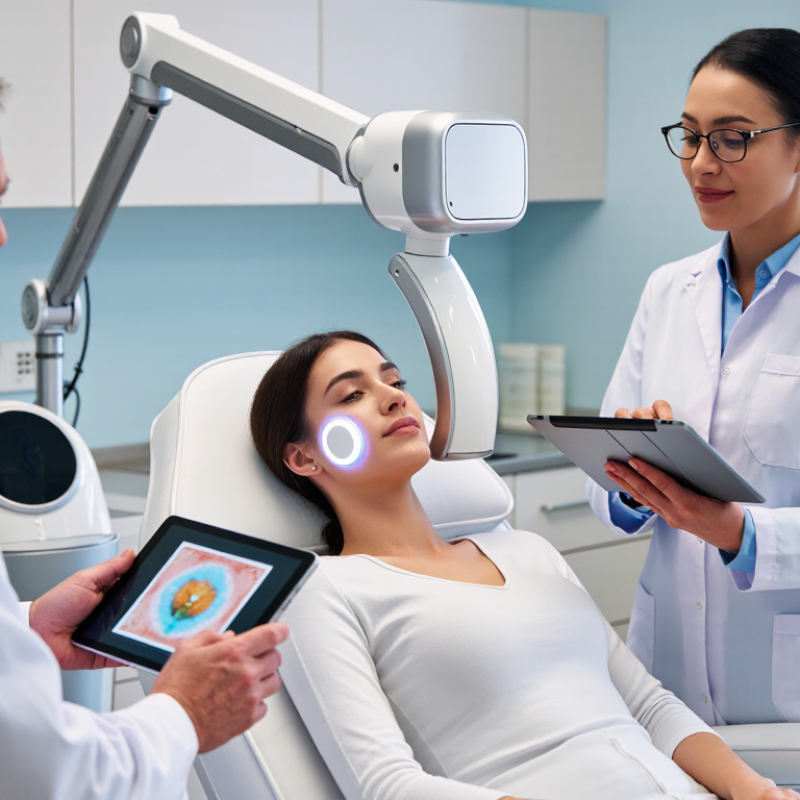
What Is a Skin Analyzer Distributor and How to Choose One?

What Is a Skin Analyzer Distributor?

A skin analyzer distributor connects manufacturers with salons, clinics, retailers, and trained beauty professionals. The distributor does more than deliver hardware. It may provide installation, software updates, staff training, calibration support, and product education. In practical evaluations, these services often determine whether a device becomes useful or remains an expensive display item.

The market is growing with wider interest in measurable skincare. The Global Wellness Institute reported that the global wellness economy reached $6.3 trillion in 2023. McKinsey also projected the global beauty market could approach $590 billion by 2028. These figures do not guarantee demand for every analyzer. They show a broader shift toward evidence-led consultations. A reliable distributor should explain how the device captures images, measures skin conditions, stores data, and limits interpretation. Ask for technical documents, training records, warranty terms, and local service arrangements. Small details matter.

Accuracy needs careful judgment. A bright screen can look convincing. It may still produce inconsistent readings under different lighting. Review repeatability tests, calibration procedures, and independent evaluations before ordering. Check whether the distributor can demonstrate the device on different skin tones and moisture levels. This step is sometimes skipped. That is a mistake.

Industry reports support market interest, but they cannot replace hands-on verification. Choose a distributor that admits limitations, avoids exaggerated treatment claims, and offers clear after-sales support. A lower purchase price may hide higher training or maintenance costs. Request a written total-cost estimate before signing.

What Products and Services Does a Distributor Provide?

A skin analyzer distributor does more than ship diagnostic equipment. A capable distributor supplies imaging devices, moisture probes, oil sensors, and software for organized skin assessments. Some packages include adjustable lighting, facial positioning guides, and washable accessories. These details matter in busy clinics, where repeated measurements must remain consistent.

A professional distributor should provide product demonstrations before purchase. Ask to test the analyzer on different skin types and lighting conditions. Training should cover image capture, sensor placement, data storage, and report interpretation. Clear manuals help, but live instruction is better. Look for calibration checks, firmware updates, troubleshooting assistance, and responsive technical support. A dependable supplier also explains warranty coverage, replacement parts, delivery schedules, and installation requirements. Request documentation for electrical safety, data protection, and equipment maintenance. These records support responsible business operations.

Service quality can be uneven.

Some distributors promise extensive support, then disappear after delivery. I have seen teams struggle because the software workflow was never tested with real clients. A careful distributor should help create consent forms, cleaning routines, and assessment protocols. However, no analyzer replaces professional judgment. Results can shift with makeup, recent skincare, room temperature, or camera distance. The distributor should explain these limits honestly. Before signing, compare training depth, response times, repair procedures, and total operating costs. A lower purchase price may become expensive when support is weak.

What Is a Skin Analyzer Distributor and How to Choose One? - What Products and Services Does a Distributor Provide?

Key products, services, specifications, and selection criteria for evaluating a skin analyzer distributor
Category Product or Service What It Typically Includes Typical Data or Specification What to Check Before Choosing
Diagnostic Equipment Multispectral Skin Analyzer Visible-light imaging combined with selected ultraviolet or polarized-light modes to support the assessment of surface texture, pores, pigmentation, redness, and other visible skin characteristics. Common systems provide approximately 3–8 imaging modes and capture several standardized facial views. Confirm whether the device uses consistent lighting, fixed positioning, repeatable imaging, and clearly defined measurement outputs.
Diagnostic Equipment Moisture and Oil Measurement Tools Probe-based measurements for skin hydration and surface sebum, often used alongside photographic analysis during consultations. Measurements are generally comparative indicators rather than medical diagnoses; results can vary with cleansing, temperature, and humidity. Ask for calibration instructions, sensor replacement intervals, cleaning procedures, and documented operating conditions.
Diagnostic Equipment Portable or Handheld Analyzer Compact camera or sensor unit designed for mobile consultations, retail counters, salons, clinics, or home-visit services. Usually powered by USB or rechargeable batteries and connected to a computer, tablet, or mobile application. Evaluate portability, battery life, connection stability, image quality, and compatibility with the buyer’s operating system.
Software Analysis and Reporting Platform Client profiles, image storage, comparison views, measurement summaries, consultation notes, recommendations, and printable or digital reports. Useful platforms commonly support user roles, data export, report customization, and multiple language options. Review data ownership, export capability, privacy controls, subscription terms, and whether reports can be customized without unsupported claims.
Software Progress-Tracking Function Comparison of images and measurements taken during different visits to help document changes in appearance and routine adherence. Reliable comparisons require consistent camera distance, lighting, facial position, and measurement conditions. Check whether the system records capture conditions and prevents misleading comparisons caused by inconsistent imaging.
Installation Equipment Setup and Configuration Device assembly, software installation, account creation, network configuration, user permissions, and initial test measurements. Setup may be completed remotely or on-site, depending on equipment complexity and distributor coverage. Request a written installation scope, estimated completion time, required workspace conditions, and responsibility for integration issues.
Training Operator Training Instruction on imaging technique, measurement procedures, device cleaning, result interpretation, report generation, and customer communication. A practical training program should include demonstrations, supervised practice, and operating documentation. Prioritize distributors that teach limitations and repeatability instead of presenting analyzer results as a medical diagnosis.
Technical Support Remote and On-Site Support Troubleshooting, software assistance, replacement-part guidance, user-account support, and escalation for hardware faults. Service quality is commonly defined by support hours, response targets, communication channels, and escalation procedures. Obtain the response-time policy, support contact details, excluded services, and fees for travel or out-of-warranty assistance.
Maintenance Calibration and Preventive Maintenance Inspection of cameras, sensors, lighting components, cables, software versions, and measurement consistency. Maintenance frequency depends on usage, environment, device design, and manufacturer instructions. Ask who performs calibration, whether certificates or service records are provided, and how downtime is handled.
Consumables Replacement and Cleaning Supplies Protective covers, sensor accessories, cleaning materials, cables, lighting components, and other approved replacement items. Consumable requirements vary by analyzer design; contact surfaces should be cleaned according to documented instructions. Confirm availability, lead times, storage requirements, compatibility, and the total recurring cost of ownership.
Compliance Documentation and Regulatory Support Product manuals, technical specifications, electrical safety information, warranty terms, and documents relevant to the destination market. Requirements differ by country and by whether the product is marketed as cosmetic, wellness, or medical equipment. Verify applicable registrations, labeling, electrical conformity, language requirements, and whether marketing claims are legally appropriate.
Commercial Terms Warranty and Replacement Policy Coverage for hardware defects, software issues, replacement parts, repair procedures, and return or exchange conditions. Coverage period, exclusions, shipping responsibility, and turnaround time vary by distributor and product configuration. Compare the written warranty rather than relying on verbal promises, and clarify coverage for batteries, sensors, screens, and accessories.
Commercial Terms Shipping and Import Assistance Packaging, freight coordination, customs documents, delivery tracking, and guidance on import requirements. Delivery time depends on stock availability, destination, customs clearance, and the selected shipping method. Request a landed-cost estimate that separates equipment price, freight, duties, taxes, insurance, and installation charges.
Distributor Evaluation Relevant Experience and References Evidence of experience supporting comparable businesses, operating environments, device types, and service requirements. Useful references should address installation, training, after-sales service, uptime, and issue resolution. Ask for verifiable references in a similar market and assess the distributor’s ability to provide ongoing local support.
Distributor Evaluation Total Cost of Ownership Purchase price or rental fee plus software subscriptions, training, calibration, consumables, repairs, shipping, and data-storage costs. The lowest initial price may not represent the lowest long-term operating cost. Compare a complete three-year cost estimate using the same usage assumptions and service requirements.
Note: Skin analyzers are generally intended to support visual consultation and cosmetic or wellness assessments. They should not be used as a substitute for examination or diagnosis by a qualified medical professional.

Why Choose a Professional Skin Analyzer Distributor?

A skin analyzer distributor supplies professional imaging devices, training, and after-sales support to skincare businesses. More importantly, a professional distributor helps teams use measurement results responsibly. Skin analysis may show hydration, oil levels, texture, pores, or visible pigmentation. However, lighting and user technique can affect readings.

Why choose a professional skin analyzer distributor? Experience matters when a device enters daily consultations. A reliable distributor should explain calibration, software functions, cleaning procedures, and operator training clearly. Ask for practical demonstrations using real consultation scenarios. Request technical documents, warranty terms, service response times, and replacement options. A confident supplier will not promise perfect results. No device is perfect.

Tips: Check whether training includes hands-on practice. Test the device under different lighting conditions. Ask how customer data is stored and protected. Review independent feedback, not only sales materials. A distributor who discusses limitations may be more trustworthy than one offering impressive claims. Small details matter. For example, unclear image instructions can produce inconsistent comparisons between visits. A professional partner should help staff record conditions, explain results in plain language, and avoid overstating what the images prove. I would also assess communication after the sale. Slow replies can become frustrating, especially when a busy clinic needs troubleshooting. This step is often overlooked.

How to Evaluate a Skin Analyzer Distributor

What Is a Skin Analyzer Distributor and How to Choose One?

How to Evaluate a Skin Analyzer Distributor

A skin analyzer distributor connects clinics, salons, and professionals with imaging devices, software, training, and service. Yet the device is only one part of the purchase. A dependable distributor explains measurement limits instead of promising perfect diagnoses. Ask how the system handles different skin tones, lighting conditions, and repeat scans. Request a live demonstration using several volunteers, not one carefully selected model. Small details matter. A useful demonstration shows raw images, reports, and the steps behind each score.

Evaluate technical competence through training records, product manuals, and support procedures. The representative should explain calibration, software updates, cleaning, and troubleshooting in plain language. Ask who answers urgent questions and how quickly replacement parts can arrive. A written warranty matters, but response times matter more during a busy clinic day. Check whether reports distinguish visible observations from professional interpretation. This protects trust. Do not accept vague claims about accuracy. The distributor should also explain data storage, user access, and applicable local requirements.

Compare total ownership costs, including installation, subscriptions, training, maintenance, and consumables. Speak with current customers about delivery accuracy and after-sales support. Ask for references from settings similar to yours. I would be cautious when a salesperson avoids difficult questions. However, no distributor is flawless, and a polished demonstration cannot predict every service problem. That limitation deserves an honest discussion. Choose a partner that documents promises and admits what the analyzer cannot measure.

How to Select the Right Distributor for Your Business

What Is a Skin Analyzer Distributor and How to Choose One?

A skin analyzer distributor connects manufacturers with clinics, salons, retailers, and trained beauty professionals. The distributor usually handles product sourcing, installation, training, maintenance, and local technical support. This role matters because an analyzer is not useful when staff cannot explain its readings clearly. McKinsey’s 2023 beauty report projects the global beauty market could reach about $580 billion by 2027, with skincare representing roughly 40%. Growing demand increases equipment choices, but also increases selection risks.

Look beyond price. Ask for proof. A suitable distributor should provide calibration records, software update details, warranty terms, and response times for technical problems. Request a live demonstration using different skin conditions and lighting environments. Check whether the report explains moisture, pigmentation, texture, pores, or sensitivity without making medical claims. The Global Wellness Institute reported that the wellness economy reached $5.6 trillion in 2022, showing how consumers increasingly expect measurable, personalized services. However, impressive market growth does not guarantee reliable data.

Compare at least three distributors using the same scorecard. Review sensor specifications, image consistency, training hours, replacement policies, and total ownership costs. Speak with current users, but remember that one successful clinic is not enough evidence. In practice, a low purchase price can hide expensive software fees or slow repairs. I would also test the distributor’s communication before signing. If answers arrive late or remain vague, future support may be worse. No scorecard is perfect. Leave room for professional judgment.

What Is a Skin Analyzer Distributor and How to Choose One?

A practical 100-point evaluation framework for selecting a distributor that can support product quality, market access, and long-term customer service.

Product quality and regulatory readiness should receive the highest priority because skin analyzers are professional diagnostic devices. Technical training, after-sales support, logistics, and commercial terms then help determine whether the distributor can deliver reliable service and sustainable market growth.