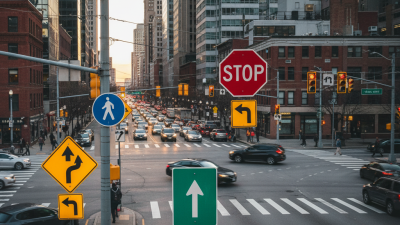
Choosing traffic control equipment in 2026 is not just a matter of comparing prices. Buyers need to match devices to road conditions, visibility, traffic speed, and the duration of a work zone. A cone that is easy to move may suit a short daytime repair, while a portable signal or message sign may be more appropriate where traffic patterns change. Small details matter. Reflective bands can disappear in glare, and a sign placed too late may leave drivers little time to react.
The safety case is substantial. The Federal Highway Administration’s Work Zone Facts and Statistics report recorded 891 work-zone fatalities in the United States in 2022. That figure does not prove that any single device prevents crashes, but it underscores why selection, placement, and maintenance deserve careful attention. FHWA guidance, including the Manual on Uniform Traffic Control Devices, offers a recognized reference for work-zone traffic management. Buyers should also review product specifications, visibility performance, power needs, setup time, and replacement-part availability. Ask for evidence, not only sales claims.
This guide compares major equipment types, from cones and barriers to arrow boards, portable signals, and variable-message signs. It focuses on practical trade-offs that procurement teams can verify. Some choices will depend on local conditions. There is no universal kit. Even experienced buyers can overlook storage space or battery life, and those gaps can become costly in the field.
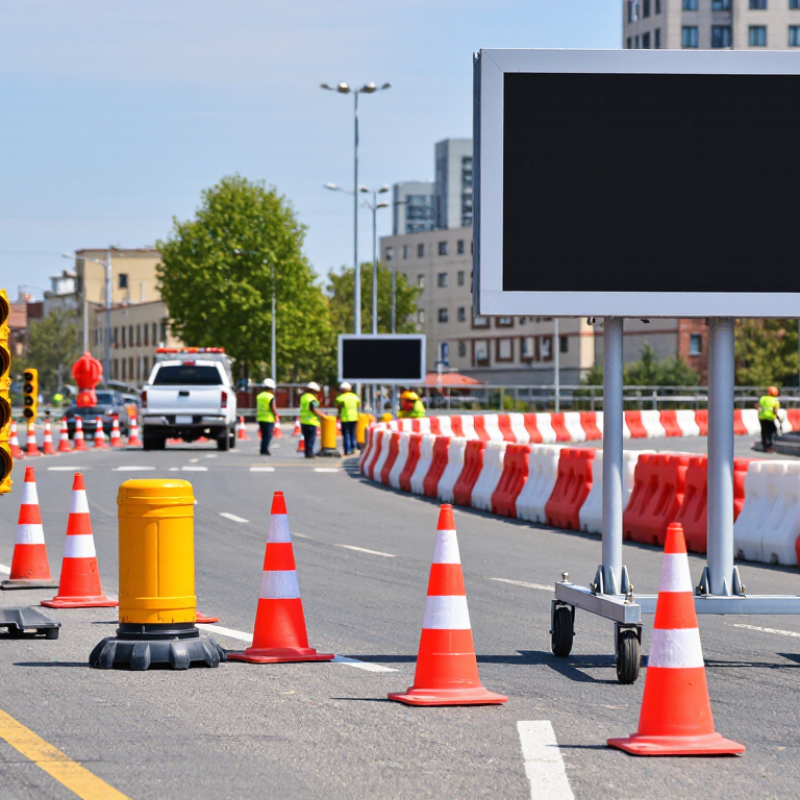
Traffic control equipment helps road users understand where to go, when to stop, and how conditions are changing. Its scope ranges from everyday work-zone signs and cones to channelizing barriers, temporary signals, speed-feedback displays, and portable message boards. Each device has a different job. A cone creates a visible boundary; a message board can warn drivers about a lane shift ahead. Used together, equipment can make a temporary traffic pattern easier to read.
For buyers in 2026, the right selection starts with the site, not a product list. Consider road speed, traffic volume, work duration, visibility, weather, and available storage. A narrow urban repair may need compact signs and sturdy barriers, while a longer rural project may require advance warnings and dependable nighttime visibility. Check setup time, transport weight, power needs, and replacement-part availability. Small details matter.
Durability matters, but so does usability. Equipment that is difficult to position may be poorly maintained in practice. Ask how devices perform in rain, glare, and repeated handling, and review inspection and maintenance requirements before purchasing. Newer connected displays can provide useful updates, yet they may add setup and power demands. More technology is not always better. Test a representative setup on site when possible, and record what workers and drivers find confusing. No specification sheet captures every condition.
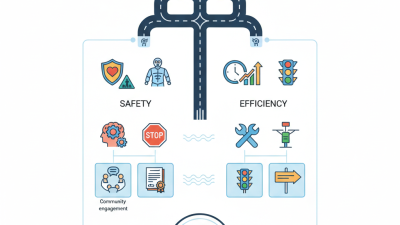
Purpose, scope, and buyer needs: an illustrative 0–100 planning score for comparing common equipment types. Scores are a qualitative framework, not market-share figures or survey results.
Portable message signs support advance warning; channelizing devices guide road users through work areas; temporary signals manage alternating traffic; barriers provide physical separation; and speed feedback signs encourage drivers to slow down. Select equipment based on site conditions, applicable regulations, and the traffic-control plan.
Cones, barriers, delineators, and channelizers each guide road users differently. Cones are easy to reposition around short-term work, but wind, passing trucks, and poor placement can reduce their visibility. Choose reflective sheeting suited to expected light and weather. Check that cones remain upright and visible from a driver’s approach, not just beside the work area. Small details matter.
For longer work zones, barriers provide a more substantial physical boundary; delineators and channelizers help mark edges, transitions, and changing paths. They are not interchangeable: match the device to traffic speed, exposure, duration, and the space available.
The Federal Highway Administration reported 891 work-zone crash deaths in 2022, underscoring the stakes of clear traffic guidance.
Its Manual on Uniform Traffic Control Devices provides national guidance on temporary traffic control layouts and device use. Buyers should review that guidance alongside project-specific plans, then inspect equipment for damage, stability, and legibility before deployment. A cracked base or faded reflective panel can undermine an otherwise careful setup.
Not every site behaves as expected. That deserves a second look.
Traffic management systems are becoming more connected, but buyers still need dependable field performance. Traffic signals control movement at intersections, where timing errors can create long queues and unsafe turning conflicts. Modern controllers can adjust phases using live traffic data. However, adaptive settings require careful commissioning and regular review. A small detection error can affect an entire corridor.
Signs provide consistent guidance before drivers reach a decision point. Variable message boards can display lane closures, travel times, weather warnings, or changing road conditions. Their text should be brief, readable, and visible from a safe distance. Brightness must suit both midday glare and nighttime driving. A message board that looks clear in a warehouse may perform poorly beside a wet roadway.
Sensors supply the information behind responsive traffic control. Radar, video detection, and embedded pavement sensors each have different installation and maintenance needs. Radar may cover several lanes, while pavement sensors can require disruptive repairs. Field teams should check alignment, power stability, data accuracy, and seasonal effects. Dust, rain, and shadows can distort readings. No system is flawless. A practical purchasing review should include maintenance access, local technician training, cybersecurity controls, and replacement timelines. It should also test failure conditions, because traffic equipment is often judged during its worst hour.
Top Traffic Control Equipment Types for Buyers in 2026
Work Zone Protection: Barricades, Crash Cushions, and Warning Devices
Work zone protection starts with equipment matched to real site conditions. Barricades should remain visible in dust, rain, and low light. Choose stable units with reflective panels, clear directional markings, and enough ballast for local wind exposure. Lightweight barriers may look efficient, but they can shift after one strong gust. That detail deserves more attention during purchasing.
Crash cushions absorb impact energy before a vehicle reaches workers or fixed hazards. Buyers should review the tested speed range, available width, repair process, and installation requirements. A cushion suitable for a narrow urban lane may not protect a high-speed roadway. Field inspections should check alignment, damaged cartridges, loose anchors, and blocked access. Small defects matter.
Warning devices add another layer of protection. Portable signs, flashing beacons, arrow boards, and audible alarms should deliver one clear message without overwhelming drivers. Solar-powered units can reduce cable hazards, yet battery performance may decline during several cloudy days. Keep spare power options available. Crews also need a simple inspection log, because equipment that works on paper may fail beside a busy lane. In practice, the best purchasing decision often balances engineering data, worker feedback, maintenance skill, and changing traffic patterns. One assumption can still be wrong.
| Equipment type | Common forms | Primary work-zone function | Typical use or placement | Buyer checks | Standards and project considerations |
|---|---|---|---|---|---|
| Barricades | Portable Type I, Type II, and Type III barricades; reflective rails; optional warning lights | Channel traffic, mark hazards, or indicate that a road or area is closed | At lane restrictions, work-zone boundaries, temporary closures, and around localized hazards | Confirm the required barricade type, stability, visibility, rail condition, reflectivity, and compatibility with specified lights | Type designations and placement requirements vary by jurisdiction. Check the current road-authority traffic-control manual and project plans. |
| Crash cushions | Redirective or non-redirective systems; reusable or sacrificial designs; systems for fixed objects or work-zone vehicles | Reduce the consequences of an impact by managing vehicle deceleration and, for redirective designs, controlling redirection | In front of exposed fixed hazards, such as barrier ends, or at locations identified in the approved work-zone layout | Match the tested configuration to the hazard and site; verify product length, width, anchorage, transitions, repair needs, and available clear area | Use the crashworthiness criteria required by the project and local authority. MASH is a widely used evaluation standard in the United States; acceptance requirements are jurisdiction-specific. |
| Advance warning signs | Temporary regulatory, warning, and guide signs; rigid or roll-up sign panels | Give road users advance notice of changed conditions, hazards, or required actions | Approaches to lane shifts, closures, detours, flagging operations, and other temporary traffic changes | Check message, size, mounting height, placement distance, legibility, retroreflectivity, and whether the sign is appropriate for the road environment | Sign design and placement should follow the applicable traffic-control manual, approved traffic-control plan, and local requirements. |
| Cones and tubular markers | Traffic cones and flexible channelizing devices, with reflective bands where required | Guide road users along a temporary path and delineate work areas | Short-duration work, tapers, lane shifts, and separation around moving or stationary work activities | Verify height and visibility requirements for the road type, base stability, material condition, reflective treatment, and suitability for wind or traffic exposure | Required device characteristics, spacing, and use depend on the governing road-authority manual and the approved work-zone plan. |
| Drums and channelizing barricades | Highly visible drums, longitudinal channelizing devices, and barricades fitted with reflective panels | Provide a more substantial visual channel than small portable markers | Longer work zones, lane closures, tapers, and areas where clear delineation is important | Assess visibility, stability, recoverability, storage and handling, and compatibility with warning lights if lights are specified | Use only in configurations permitted by the local traffic-control standard and project documents; do not assume devices provide physical impact protection. |
| Arrow boards | Portable or vehicle-mounted boards displaying directional arrows or caution patterns | Warn approaching drivers and communicate a lane-closure or merge instruction | Upstream of mobile operations and lane closures, as specified in the traffic-control plan | Check display modes, visibility, mounting position, power supply, controls, and suitability for the intended road speed and operating conditions | Display patterns, placement, and permitted use are governed by the applicable traffic-control manual and project requirements. |
| Warning lights and beacons | Flashing or steady-burn lamps used on signs, barricades, channelizing devices, or work vehicles | Increase conspicuity, especially in low-light conditions or where additional warning is specified | Attached to temporary signs or devices, or mounted on work vehicles, according to the site plan | Confirm light type, visibility, mounting compatibility, power source, battery runtime, weather resistance, and maintenance access | Color, flash pattern, and permitted applications vary by jurisdiction. Follow local rules and avoid using lights in a way that conflicts with other traffic signals. |
| Flagger control equipment | STOP/SLOW paddles, approved flags where permitted, and high-visibility apparel | Support clear communication between trained personnel and approaching road users | Alternating one-way traffic, short-term closures, and operations where a flagger is authorized by the traffic-control plan | Check paddle visibility, handle and face condition, apparel requirements, communication arrangements, and worker training | Flagger procedures, signs, and protective measures must meet the applicable road-authority requirements and site-specific plan. |
In 2026, compare traffic control equipment by asking how it performs after months of rain, heat, vibration, and repeated handling. Check material strength, visibility, battery life, repair access, and replacement-part availability. A bright display is not enough if its controls are difficult to use with gloves. Verify that signs, barriers, signals, and connected devices meet the current MUTCD edition and applicable local requirements.
The Federal Highway Administration reported 891 work-zone crash deaths in 2022, underscoring why dependable, clearly visible equipment matters.
Compliance is a baseline, not a performance guarantee.
Technology can improve coordination, but buyers should test it in real operating conditions. Review wireless range, power-loss behavior, data security, and whether equipment remains usable when connectivity fails. Ask for documented test results and maintenance records, not just sales claims.
Calculate total cost over the expected service life: purchase price, installation, training, batteries, repairs, software, and disposal. The cheapest unit may become expensive when crews must replace it early. I would still allow for uncertainty; field conditions rarely match a perfect product demonstration.