Why Choose Traffic Safety Products for Global Buyers?
Global buyers choose traffic safety products because safer roads require visible, durable, and carefully tested equipment. A reflective cone must remain noticeable beside a wet highway at night. A guardrail must resist impact, corrosion, and repeated weather exposure. These details influence purchasing decisions more than a low invoice alone.
Road-safety expert Claes Tingvall stated, “The basic philosophy of Vision Zero is that no one should be killed or seriously injured within the road transport system.” His words explain the wider purpose behind traffic safety products. They are not simple roadside accessories. They support safer decisions by drivers, pedestrians, contractors, and transport authorities.
Reliable suppliers provide more than product images. They should explain material grades, reflective performance, load capacity, installation methods, and maintenance requirements. Independent testing and documented quality controls add confidence. Buyers must also verify local standards, because a product accepted in one market may require changes elsewhere. That part is easy to underestimate.
Real performance depends on use. A temporary barrier installed on uneven ground may fail to guide traffic correctly. A solar warning lamp with weak battery protection may stop working during long winter nights. No product is perfect. Even strong equipment needs inspection, correct placement, and timely replacement.
For global buyers, the strongest choice combines tested performance, practical support, stable supply, and transparent communication. Price still matters. However, a cheaper product can create higher costs through damage, downtime, or repeated replacement. Careful evaluation helps organizations purchase with confidence while supporting safer roads across different environments.
Road risk is not an abstract statistic. The WHO Global Status Report on Road Safety 2023 records about 1.19 million road traffic deaths each year. It also estimates 20–50 million non-fatal injuries annually. More than half of those killed are pedestrians, cyclists, and motorcyclists. A damaged sign, weak barrier, or poorly visible cone can turn a small mistake into a serious event.
Global buyers need evidence, not attractive catalogs. Traffic safety products should be assessed for visibility, impact performance, weather resistance, and installation reliability. Independent test reports matter. Buyers can request material specifications, photometric results, batch records, and service-life data. ISO 39001 provides a useful framework for managing road traffic safety risks, while local standards may govern signs, barriers, markings, and work-zone equipment. Products should also withstand UV exposure, salt air, heavy rain, and repeated handling during shipping.
The OECD/ITF Road Safety Annual Report shows that safety outcomes differ widely between countries. This makes local road conditions important during procurement. A product that performs well in a laboratory may fail beside a windy road. We sometimes overvalue unit price. Replacement labor, damaged shipments, and delayed installation can cost much more. Reliable suppliers therefore provide clear specifications, traceable quality records, and practical guidance for storage and deployment. Small details matter.
Traffic safety products work through three functions: warning, control, and protection.
Warning
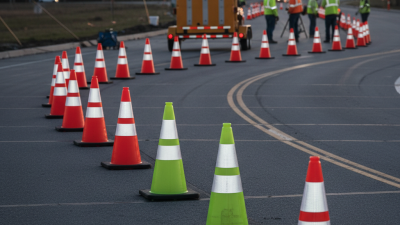
Warning devices make hazards visible before drivers reach them. High-intensity signs, reflective cones, flashing beacons, and temporary markings help at night, during rain, and near roadwork.
Control
Control products guide movement through changing conditions. Barriers, delineators, lane separators, and traffic signals create clearer paths for drivers and pedestrians.
Protection
Protection products reduce impact risks after a hazard appears. Crash cushions, guard systems, pedestrian barriers, and impact-resistant posts can separate people from moving vehicles.
The World Health Organization’s Global Status Report on Road Safety 2023 estimates 1.19 million road deaths each year.
Visibility remains a practical priority, not a decorative feature. Small details matter. A faded surface can fail when glare, dust, or heavy traffic reduces attention.
They should match road width, vehicle speed, installation time, and local operating practice.
The International Labour Organization reports that work-related accidents and diseases cause nearly three million deaths annually, although road exposure is only one part of that total.
Specifications should be checked carefully. A stronger product is not automatically safer if it is poorly placed. That is an uncomfortable lesson.
Global buyers also need consistent testing records, material information, replacement guidance, and traceable quality checks.
No product works alone. Field conditions can still defeat a good plan.
Global buyers need traffic safety products that perform beyond the factory gate. The World Health Organization’s Global Status Report on Road Safety 2023 estimates 1.19 million road deaths each year. That figure makes compliance a practical responsibility, not a sales phrase. ISO 39001 helps organizations manage road traffic safety through documented risks, targets, controls, and continual improvement. It supports safer procurement decisions.
Product specifications also require close technical review. EN 12899 covers fixed vertical road traffic signs, including performance, stability, and durability requirements. ASTM D4956 classifies retroreflective sheeting by optical performance and intended use. At night, a sign should return light clearly to approaching drivers. Poor cleaning, incorrect installation, or aging surfaces can reduce that benefit. Small details matter.
Independent test reports should identify material class, color, photometric values, weathering results, and production batches. Buyers should also request traceable inspection records. The European Commission’s road safety monitoring reports continue to show that infrastructure and road-user protection remain major safety priorities across Europe. Yet paperwork alone is not enough. Field conditions can expose weaknesses that laboratory testing misses. Rain, dust, mounting angles, and repeated temperature changes deserve practical evaluation. Some procurement teams still treat standards as checkboxes. That approach needs reconsideration. Reliable suppliers explain limitations honestly, because no sign remains perfect in every climate or viewing distance.
Traffic safety products perform differently when roads, weather, and drivers change. A barrier marker tested in a dry warehouse may fade quickly under coastal sunlight. In field evaluations, I examine temperature swings, rainfall, dust, and repeated handling. These details reveal weaknesses that product sheets often miss. Climate should guide material choice, not merely purchasing price. UV exposure can weaken plastics. Freezing conditions can make flexible parts brittle. High heat may soften adhesives or distort housings. Choose accordingly.
Visibility also depends on the road itself. Reflective surfaces need clear sight lines, while warning lights must remain noticeable in glare, fog, or heavy rain. A bright product is not automatically a safe product. Its color, beam angle, mounting height, and background contrast all matter. I prefer samples tested from driver eye level, at night and during bad weather. Small gaps appear then. Sometimes the brightest lamp creates distracting glare. That finding deserves a second review.
Road-use conditions complete the decision. Temporary work zones face impacts, wind, vehicle spray, and frequent relocation. Permanent installations demand corrosion resistance, stable anchoring, and easy inspection. Check dimensions, load limits, drainage, and replacement access before approval. Local maintenance skills matter too. A reliable product must remain usable after ordinary wear, not only laboratory testing. No selection method is perfect. Recheck performance after installation, because real roads often disagree with careful plans.
| Traffic Safety Product | Typical Road-Use Condition | Climate and Environmental Factors | Visibility Requirement | Material or Construction Considerations | Relevant International Reference | Selection Guidance for Global Buyers |
|---|---|---|---|---|---|---|
| Traffic Cones | Temporary lane separation, work zones, incident management, and vehicle-channelizing areas. | Frequent exposure to sunlight, rain, snow, road salt, and temperature changes. Flexible construction is useful where vehicles may strike the cone. | Use a high-contrast color such as fluorescent orange or yellow. Retroreflective bands improve recognition when illuminated by vehicle headlights at night. | Flexible PVC, rubber, or similar impact-resistant materials are commonly used. A weighted base improves stability in wind and passing-vehicle turbulence. | EN 13422 covers traffic cones and delineators for temporary traffic control. Local work-zone regulations may also apply. | Confirm cone height, base weight, reflective-band configuration, and color requirements for the destination country before ordering. |
| Flexible Delineator Posts | Road-edge marking, temporary channelization, lane transitions, and separation of opposing or merging traffic streams. | Choose UV-resistant materials for high-sun regions and flexible designs for areas with frequent vehicle contact. Drainage and corrosion-resistant fixings are important in wet climates. | Retroreflective panels or bands should face approaching traffic and remain visible after bending or impact. | Common designs use flexible polymers with a weighted base, surface mount, or embedded fixing. The fixing method must match the pavement and expected impact level. | EN 13422 provides requirements for temporary traffic delineators. Performance may also be specified by national road authorities. | Match post height, spacing, base type, and reflector orientation to road speed, lane geometry, and local installation rules. |
| Permanent Road Delineator Posts | Rural roads, curves, bridges, road shoulders, and routes where edge guidance is needed during darkness or poor weather. | Consider UV exposure, frost, snowplow contact, moisture, dust, and de-icing chemicals. Materials should resist brittleness and discoloration over time. | Use retroreflectors or reflector panels suitable for the direction of travel. White and red reflector arrangements vary by jurisdiction. | Impact-resistant polymer, treated metal, or composite construction may be used. The foundation and anchoring system must suit soil and roadside conditions. | National road-marker specifications differ substantially; EN 12899-1 may be relevant where fixed vertical road traffic signs and their performance are specified. | Check reflector color, mounting height, lateral offset, spacing, and snow-zone requirements with the local road authority. |
| Reflective Warning Signs | Advance warnings, regulatory information, construction areas, detours, crossings, and hazard identification. | Use weather-resistant face materials and corrosion-resistant supports in coastal, humid, or high-salt environments. Allow for thermal expansion on large panels. | Retroreflective sheeting returns part of a vehicle headlamp beam toward the driver, improving nighttime legibility. Sign color, symbol, and viewing angle remain critical. | Aluminum is widely used for lightweight, corrosion-resistant sign panels. Edges, mounting hardware, and protective laminates should be selected for the exposure level. | ASTM D4956 classifies retroreflective sheeting performance. EN 12899-1 covers fixed vertical road traffic signs in applicable European contexts. | Specify sign size, legend, language, symbol system, retroreflective performance class, wind-load requirement, and local conformity needs. |
| LED Road Beacons and Warning Lights | Work zones, emergency scenes, barricades, pedestrian crossings, intersections, and locations requiring active warning. | Outdoor equipment should have a suitable IP enclosure rating for dust and water exposure. Battery performance can decline in cold weather; solar output can be reduced by shade, cloud, or snow. | Amber is commonly used for general hazard warning, while permitted colors and flash patterns depend on local regulations. Optical output should be evaluated at the intended viewing distance. | Use sealed electronics, UV-stable lenses, corrosion-resistant housings, and serviceable power systems. Solar versions need correctly sized panels and batteries for seasonal conditions. | IEC 60529 defines IP degrees of protection for enclosures. Electrical safety and road-use requirements must be verified under the destination market's rules. | Compare operating hours, charging conditions, flash pattern, mounting method, temperature range, ingress protection, and replacement-battery availability. |
| Water-Filled Barriers | Temporary pedestrian protection, work-zone separation, lane diversions, and controlled access areas. | Suitable for many climates, but freezing water can expand and damage containers. UV stabilization is important in regions with strong sunlight; ballast may be affected by evaporation or leakage. | High-visibility colors, reflective strips, and optional warning lamps improve recognition, particularly at night and during rain. | High-density polyethylene is commonly used. Interlocking geometry, ballast capacity, leak resistance, and handling points affect stability and deployment efficiency. | EN 1317 is a key European reference for vehicle restraint systems; temporary pedestrian or work-zone barriers may be subject to additional national requirements. | Confirm whether the barrier is intended for pedestrian guidance or vehicle containment. Do not treat a pedestrian barrier as a tested crash barrier without documented performance evidence. |
| Steel or Polymer Safety Barriers | Permanent or semi-permanent separation between vehicles, pedestrians, cyclists, and restricted areas. | Galvanized or coated steel is useful in corrosive environments. Polymer systems can reduce corrosion concerns but require verification of UV and impact durability. | Reflective panels, hazard markers, or integrated lighting may be needed where the barrier is close to moving traffic or poorly illuminated. | Selection depends on containment level, working width, anchoring, terminal treatment, deflection, and compatibility with the pavement or structure. | EN 1317 specifies performance assessment for many road restraint systems, including containment and impact-related criteria. | Request independently documented crash-test performance, installation drawings, anchoring details, maintenance requirements, and replacement-part availability. |
| Speed Humps and Modular Speed Cushions | Traffic calming on low-speed roads, residential streets, car parks, school zones, and private access roads. | Consider drainage, standing water, snowplow use, tire-chain exposure, UV radiation, and pavement temperature. Bright surfaces may fade without UV-resistant pigment. | Contrasting colors, reflective markings, road studs, and advance signs improve daytime and nighttime recognition. | Rubber, recycled polymer, asphalt, or concrete may be used. Ramp angle, height, width, anchoring, and modular joints affect ride quality and durability. | Design and installation rules are generally controlled by national or municipal authorities rather than one universal global standard. | Verify permitted dimensions, target speed, drainage impact, emergency-route requirements, bicycle access, accessibility concerns, and local approval procedures. |
| Wheel Stops and Parking Delineators | Parking bays, loading areas, pedestrian protection zones, garages, and vehicle positioning control. | Outdoor products should resist UV, water, oil, fuel splashes, and freeze-thaw cycles. Indoor installations may prioritize low odor and easy cleaning. | Reflective bands or inserts improve recognition in garages and low-light parking areas. Contrast with the pavement is important for daytime visibility. | Recycled rubber, polymer, concrete, and steel are common options. Anchors must be compatible with asphalt, concrete, or other substrate types. | Installation and accessibility requirements are usually specified by local building, parking, and road authorities. | Compare impact resistance, anchor design, dimensions, drainage clearance, trip risk, vehicle compatibility, and replacement convenience. |
| Temporary Road Marking Tape | Short-term lane lines, detours, construction-stage markings, and temporary changes to traffic flow. | Performance depends on pavement temperature, moisture, dust, surface texture, snow removal, and duration of exposure. Application should follow the product's temperature and surface-preparation limits. | White and yellow markings provide lane or separation information where permitted. Retroreflective elements support nighttime visibility. | Choose removable or durable tape according to project duration. Adhesion, edge lifting, skid resistance, and clean removal are key performance factors. | EN 1436 provides performance-related requirements for road marking materials in applicable European markets; local specifications may differ. | Confirm pavement compatibility, application temperature, wet-weather performance, removal method, expected service period, and traffic-loading conditions. |
Why Choose Traffic Safety Products for Global Buyers?
Road crashes are a public health issue and a serious economic burden. The World Health Organization reports that road crashes can cost countries up to 3% of gross domestic product. That loss includes emergency care, vehicle repairs, lost wages, and reduced productivity. A damaged guardrail or faded crossing can create costs far beyond its purchase price.
Traffic safety products help reduce exposure to these risks when selected and installed correctly. Reflective road signs improve visibility on dark, wet streets. Flexible delineator posts guide drivers around construction zones. Speed control equipment can protect pedestrians near schools, markets, and transport hubs. Procurement teams should check material strength, weather resistance, visibility distance, and local road conditions. Small details matter.
A low price is not always economic value. Poorly chosen products may crack under heat, fade under sunlight, or require frequent replacement. That creates hidden labor and transport expenses. Maintenance records should be part of every purchasing decision. So should testing documents and clear installation guidance. Products alone cannot prevent every crash. Driver behavior, road design, enforcement, and maintenance remain essential. This is where buyers must reflect carefully. A product can meet a specification and still fail in real traffic. Field trials, local feedback, and periodic inspections provide stronger evidence than a catalogue description. Safety is measured on the road, not only on paper.
Road traffic crashes create a substantial economic burden: the World Health Organization estimates that they can cost countries up to 3% of GDP. The imbalance shown above also highlights the need for targeted traffic safety investment: low- and middle-income countries account for approximately 92% of global road traffic deaths while having about 60% of the world's motor vehicles.
Source: World Health Organization, Global Status Report on Road Safety 2023.