Choosing the best traffic safety equipment in 2026 requires more than comparing prices or product photos. Global buyers must examine visibility, impact resistance, weather performance, installation quality, and long-term maintenance. A bright cone may look reliable indoors, yet fade quickly under strong sunlight. A portable barrier may appear sturdy, but fail when wind, water, or repeated vehicle contact creates extra stress.
Dr. Etienne Krug of the World Health Organization has stated, “Road traffic crashes are a leading cause of death and disability worldwide.” His warning gives this purchasing decision real weight. Equipment protects workers, drivers, cyclists, and pedestrians only when it matches actual road conditions. This guide reviews reflective clothing, traffic cones, warning lights, crash barriers, delineators, and smart monitoring tools for international procurement teams. It considers recognized testing practices, material quality, visibility distance, packaging, replacement parts, and supplier documentation. Local climate matters. So does worker behavior. Products should remain useful during rain, dust, nighttime operations, and sudden traffic changes.
Some rankings may remain imperfect. Product performance can change between batches, suppliers, and installation sites. Laboratory results cannot reproduce every roadside risk. Buyers should verify certificates, request samples, and conduct controlled field checks before large orders. Small details matter. A loose base can become a serious hazard. A weak battery can reduce warning time. The strongest choice is not always the most expensive one. It is the equipment that performs consistently, fits the operating environment, and supports safer decisions every day.
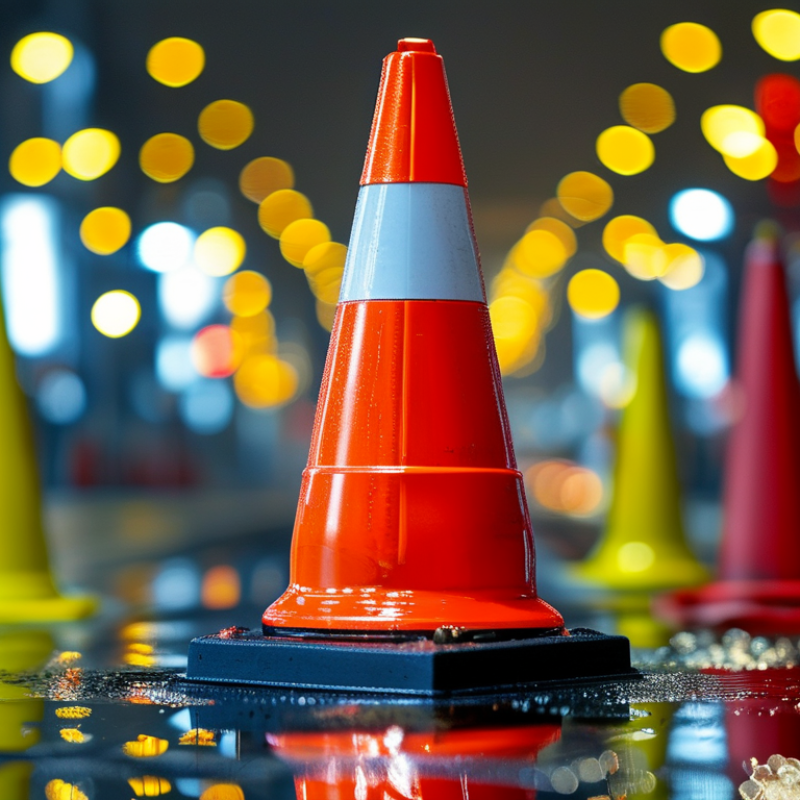
Traffic safety equipment includes more than cones and warning signs. It covers reflective vests, temporary barriers, road studs, warning lights, speed displays, lane separators, and pedestrian guidance systems. It also includes mounting hardware, batteries, inspection tools, and replacement parts. Small details matter. A loose base can turn a barrier into a hazard during strong wind.
In 2026, buyers need equipment that performs in daylight, rain, dust, and low visibility. High-visibility materials should remain readable after repeated cleaning and outdoor exposure. Flashing lights need stable brightness, reliable charging, and simple controls. Portable signs should resist tipping, while barriers should guide movement without creating sharp edges. Field experience shows that compatibility is often overlooked. A sign may fit one support system but fail with another.
Selection should follow local road rules, site conditions, and documented testing. Buyers should request material specifications, visibility data, load limits, service instructions, and inspection records. Independent testing can improve confidence, especially for equipment used near schools, work zones, and busy crossings.
Still, paperwork cannot replace a site trial. No checklist is perfect. I have seen well-rated equipment perform poorly after careless placement. Maintenance matters too. Faded markings, weak batteries, and damaged reflectors can quietly reduce protection. Teams should record inspections and replace uncertain items before visibility becomes a problem.
2026 Best Traffic Safety Equipment for Global Buyers?
How to Classify Traffic Safety Equipment by Use and Risk
Traffic safety equipment should be classified by use, exposure, and failure risk. Channeling tools include cones, barriers, lane separators, and temporary delineators. Warning tools include reflective signs, lamps, and electronic message boards. Protection equipment includes impact attenuators, guardrails, worker clothing, and vehicle-mounted cushions. The World Health Organization’s Global Status Report on Road Safety 2023 recorded about 1.19 million annual road deaths and 20–50 million non-fatal injuries. These figures show why classification cannot rely on product appearance alone.
Risk increases with vehicle speed, traffic volume, poor visibility, and worker proximity. A lightweight cone may suit a quiet parking area. It is unsuitable beside fast-moving traffic. High-risk locations need tested impact performance, strong visibility, stable installation, and clear maintenance records. The FHWA Manual on Uniform Traffic Control Devices emphasizes consistent signs, markings, and temporary traffic-control layouts. Still, standards vary between countries. Buyers must verify local requirements, climate resistance, reflectivity, and replacement access. The boundary is not always tidy.
Tips: Match equipment to the worst realistic condition, not the average day. Check visibility at night, during rain, and from a driver’s approach. Record inspection dates. A perfect checklist does not replace site judgment.
Equipment selection should follow both the road user and the exposure risk. Vulnerable road users require high-visibility clothing, lighting and protective barriers, while vehicle occupants require lane separation, impact protection and work-zone warning systems. The chart uses rounded global estimates from the World Health Organization's Global Status Report on Road Safety 2018; percentages represent the approximate share of road traffic deaths by road-user group.
| Use and Risk Category | Typical Equipment | Primary Risk-Control Function |
|---|---|---|
| Pedestrians — High risk | High-visibility garments, pedestrian barriers, warning beacons | Visibility and separation from moving traffic |
| Powered two- and three-wheelers — High risk | Protective helmets, reflective apparel, delineators | Personal protection and conspicuity |
| Vehicle occupants — Medium risk | Crash cushions, guardrails, temporary traffic signs | Impact absorption and traffic guidance |
| Cyclists — High risk | Reflective accessories, cycle-lane separators, warning lights | Visibility and protection from vehicle conflict |
Global buyers should check standards before comparing prices. A bright cone is not automatically a compliant cone. Ask for the exact product standard, certificate number, issuing body, and test date. For high-visibility clothing, review EN ISO 20471 or ANSI/ISEA 107, depending on the market. For road restraint systems, check EN 1317 or the required local equivalent. Traffic signs and warning devices may also require ISO 3864, EN 12899, EN 12352, or national specifications.
Certification scope matters. A supplier may hold ISO 9001, but that usually confirms management processes, not product performance. Request independent laboratory reports, preferably from an ISO/IEC 17025-accredited laboratory. Check reflective performance, UV resistance, impact strength, temperature tolerance, and batch traceability. Samples should match the tested model. They sometimes do not. That gap deserves attention.
Tips: Confirm the destination country’s acceptance rules. Check whether CE marking applies, and never treat it as universal approval. Compare certificate details with labels, packaging, and technical drawings. Ask for the latest standard edition. Test a small shipment before a large order. Keep records of inspections and corrective actions. This process is not perfectly neat, but careful documentation can expose weak evidence before installation.
For global buyers, traffic safety equipment should be compared by material, performance, and total cost. The need is serious. The World Health Organization’s Global Status Report on Road Safety 2023 recorded about 1.19 million annual road deaths worldwide. Equipment cannot solve every risk, but poor visibility can worsen it.
Start with material behavior. Virgin polyethylene usually resists impact and moisture well. Recycled plastic may reduce cost, but quality can vary between batches. Check UV-aging results, low-temperature impact tests, ballast capacity, and reflective performance. For barriers, review test evidence against recognized standards, such as EN 1317 or applicable national requirements. Retroreflective sheeting should also show measured brightness after weathering, not only a fresh laboratory result. FHWA work-zone data recorded 891 deaths in the United States during 2022. That figure supports careful selection, especially near moving traffic.
Tips: Request batch-specific test reports, not generic brochures. Calculate purchase, freight, setup, cleaning, storage, replacement, and disposal costs. A lighter cone may reduce freight expense. It may also move more easily in strong wind. That trade-off needs field testing. Ask for service-life assumptions under your climate. Coastal salt, intense sunlight, and freezing cycles can change the result. The cheapest option can look rational. It often is not. A spreadsheet may still miss worker time and damaged vehicles. Compare three-year cost per usable day, then challenge your own assumptions before ordering.
Global buyers need traffic safety equipment that performs beyond a catalog image. The World Health Organization reports about 1.19 million road deaths each year, while crashes cost many countries nearly 3% of GDP. These figures make supplier selection a risk decision, not only a price comparison. Request test reports, material specifications, product photos, and traceable batch records. For cones, barriers, signs, and warning lights, check visibility, impact resistance, temperature tolerance, and expected service life.
Ask suppliers to confirm production capacity before accepting a large order. A small sample can reveal weak seams, uneven reflective film, or unstable bases. It happens. Customize with measured drawings, color references, mounting details, packaging instructions, and inspection checkpoints. Avoid vague phrases such as “high quality.” Define acceptable tolerances instead. Independent pre-shipment inspection is useful, although it cannot replace real field testing.
Delivery planning deserves equal attention. The World Bank’s 2023 Logistics Performance Index evaluates customs, infrastructure, shipment organization, tracking, and timeliness. Compare suppliers using these practical factors, not promised shipping speed alone. Confirm the Incoterm, carton dimensions, pallet count, documents, and backup transport route. Build buffer time for port congestion and seasonal demand. A shared order schedule helps, but it may still fail when specifications change late. Keep written approval records, monitor production weekly, and check samples before loading.