An Anchor Bolt connects a structure to its foundation, transferring tension, shear, and sometimes overturning forces into concrete. It may look simple: a steel rod, nut, washer, and embedded thread. The design is rarely simple. A misplaced bolt can leave a column base plate misaligned by only a few millimeters, yet that small error can delay installation and require corrective work.
Industry standards define the choices more clearly. ASTM F1554 identifies anchor-rod grades 36, 55, and 105, helping engineers match strength with project demands. ACI 318, Chapter 17, provides requirements for anchoring structural elements to concrete. For post-installed systems, ICC-ES AC193 evaluates mechanical anchors, while AC308 covers adhesive anchor qualification. These documents address embedment, edge distance, cracked concrete, installation procedures, and testing. The American Institute of Steel Construction also emphasizes accurate base-plate detailing and field verification in its Steel Construction Manual.
Common types include cast-in-place headed anchors, bent-bar anchors, wedge anchors, sleeve anchors, and adhesive anchors. Each behaves differently under load and installation conditions. A headed stud may suit a new concrete pour, while a wedge anchor can support retrofit work after drilling. Adhesive systems offer flexibility, but hole cleaning and temperature control become critical. The choice is not obvious. It depends on load direction, concrete strength, spacing, corrosion exposure, and inspection access. Even experienced teams should question convenient assumptions. A strong bolt is not automatically a reliable connection. The entire anchorage system must work together.
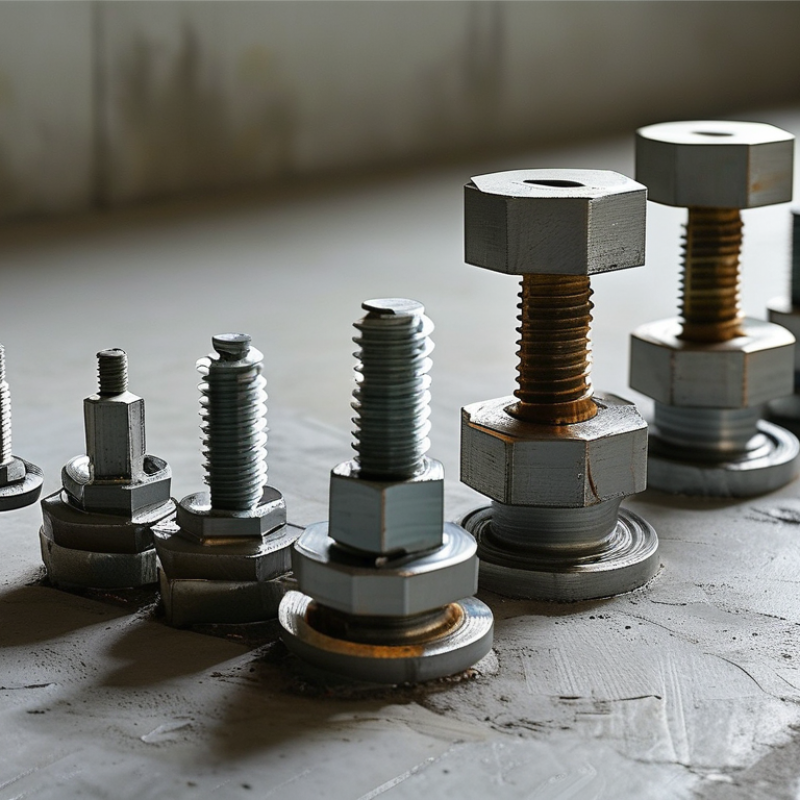
An anchor bolt is a steel fastener that connects a structure to concrete or masonry. It transfers tension, shear, or both into the supporting material. This connection helps hold columns, steel frames, machinery, guardrails, and base plates in position.
Its purpose is not simply to keep equipment from moving. An anchor bolt also resists uplift, vibration, wind pressure, and occasional impact. Cast-in-place anchors are installed before concrete hardens, often with hooked or headed ends. Post-installed anchors are drilled into existing concrete later. Mechanical anchors expand inside the hole, while adhesive anchors rely on a bonded rod and carefully prepared surfaces.
Selection depends on load direction, embedment depth, concrete strength, edge distance, and exposure conditions. Stainless or coated steel may suit damp locations, but corrosion resistance must match the environment. Installation details matter just as much. Dust left in a drilled hole can reduce bond strength. Insufficient tightening can allow movement, while excessive torque may damage the concrete.
It is easy to trust a neat drawing.
Real sites are less predictable.
Cracked concrete, misplaced reinforcement, or uneven base plates can change the connection’s behavior. A qualified engineer should verify the design, and installers should follow approved procedures, use calibrated tools, and record inspection results. The strongest-looking bolt is not automatically the safest choice.
Anchor bolts connect steel columns, base plates, equipment, and concrete foundations. Their main job is transferring tension, shear, and uplift forces into the concrete. A threaded rod may look simple, but the connection depends on embedment depth, edge distance, concrete strength, and correct tightening.
During installation, the bolt is positioned before concrete placement, often through a template that keeps spacing accurate. After curing, nuts and washers clamp the base plate against the foundation. Under tension, the bolt stretches slightly while the concrete resists breakout around the embedded section. Under shear, force travels through the bolt, washer, plate, and concrete interface. AISC connection guidance and ACI 318 design provisions require engineers to check these failure modes, not just bolt diameter. The 2022 U.S. Bureau of Labor Statistics report recorded 1,069 construction fatalities, reminding crews that small alignment or lifting errors can have serious consequences.
Tips: Check bolt projection with a calibrated gauge. Confirm the specified grade before installation. Keep threads clean, but avoid forcing damaged nuts. A common mistake is treating anchor bolts like ordinary machine bolts. They are part of a load path. Field conditions can also expose weaknesses that drawings miss, such as cracked concrete or standing water. That is why experienced inspectors verify location, plumbness, washers, torque records, and concrete strength before accepting the connection. Reference values should come from the project specification and current structural standards, not memory.
| Anchor Bolt Type | How It Transfers Load | Typical Applications | Common Materials or Finishes | Key Advantages | Important Limitations |
|---|---|---|---|---|---|
| Cast-in-Place Anchor Bolt | Embedded in fresh concrete before it hardens; the embedded end develops resistance through its head, hook, plate, or threaded geometry. | Structural steel columns, base plates, equipment supports, masonry walls, and concrete foundations. | Carbon steel, stainless steel, hot-dip galvanized steel, or zinc-plated steel. | High reliability when accurately positioned; suitable for significant tension and shear forces. | Requires accurate layout before concrete placement; relocation or correction after curing can be difficult. |
| Hooked Anchor Bolt | A bent hook, such as an L-shaped or J-shaped end, creates mechanical anchorage within the concrete. | Foundation base plates, light-to-medium structural connections, and embedded supports. | Usually carbon steel or galvanized steel. | Simple geometry and effective anchorage without a separate expansion mechanism. | Needs sufficient embedment and concrete edge distance; unsuitable for installation after concrete has cured. |
| Headed Anchor Bolt | A forged or welded head bears against the surrounding concrete and resists pullout. | Heavy structural columns, moment-resisting base connections, and heavily loaded equipment supports. | High-strength carbon steel, stainless steel, or galvanized steel. | Provides positive bearing resistance and is well suited to high tension loads. | Must be designed with adequate embedment, concrete strength, edge distance, and reinforcement. |
| Sleeve Anchor | Tightening the nut pulls a tapered stud into an expansion sleeve, pressing the sleeve against the sides of a drilled hole. | Attachment of fixtures, rails, light structural members, and equipment to concrete or masonry. | Zinc-plated carbon steel, stainless steel, or galvanized steel. | Easy to install in hardened concrete and available in many diameters and lengths. | Performance depends on hole quality, base-material strength, edge distance, and proper tightening. |
| Wedge Anchor | A wedge clip expands against the sides of a drilled hole as the nut is tightened, creating mechanical interlock. | Structural steel attachments, handrails, machinery, safety barriers, and concrete connections. | Carbon steel with zinc or galvanized coating; stainless steel for corrosive environments. | Strong resistance to tension and shear in sound, solid concrete. | Generally unsuitable for weak or hollow masonry; requires correct hole diameter and cleaning. |
| Drop-In Anchor | An internal expander is set inside a predrilled hole and expands against the hole wall when the setting tool is used. | Overhead threaded-rod installations, suspended services, cable supports, and mechanical systems. | Carbon steel, stainless steel, or corrosion-resistant plated steel. | Provides a flush internal thread and a clean finished surface after installation. | Requires a dedicated setting procedure; commonly intended for solid concrete and controlled installation conditions. |
| Undercut Anchor | A specially shaped hole creates a mechanical undercut; the anchor fills or engages that undercut to resist pullout. | High-load structural connections, façade systems, seismic applications, and safety-critical attachments. | High-strength carbon steel or stainless steel. | Strong mechanical interlock with reduced dependence on friction or expansion pressure. | Requires specialized drilling equipment, careful installation, and strict design verification. |
| Chemical or Adhesive Anchor | A threaded rod or reinforcing bar is bonded to the sides of a drilled hole with a resin-based anchoring adhesive. | Post-installed structural connections, reinforcing-bar extensions, equipment supports, and repairs. | Threaded rods or bars made from carbon steel, galvanized steel, or stainless steel. | Low expansion pressure can allow reduced edge distances and flexible embedment depths. | Capacity depends on hole cleaning, adhesive temperature, curing time, moisture, and installation quality. |
| Expansion Anchor | Torque or impact installation expands one or more components against the sides of a drilled hole. | General-purpose attachments to concrete, solid brick, and other suitable base materials. | Carbon steel, stainless steel, zinc-plated steel, or galvanized steel. | Fast post-installed solution with no curing period. | Expansion pressure may be unsuitable near concrete edges or in cracked and weak base materials. |
| Threaded Rod with Nut and Washer | Transfers clamping force through a nut and washer; anchorage is provided by an embedded or bonded end configuration. | Equipment mounting, pipe supports, structural attachments, and chemical-anchor systems. | Carbon steel, galvanized steel, stainless steel, or high-strength alloy steel. | Adjustable connection length and convenient compatibility with standard threaded components. | The rod, nut, washer, anchoring method, and base material must be designed as one complete system. |
| Seismic-Rated Anchor | Designed and qualified to maintain resistance under cyclic tension and shear caused by seismic movement. | Structural and nonstructural components in regions where earthquake design requirements apply. | Typically high-strength carbon steel or stainless steel with a tested protective finish. | May provide documented performance for cracked concrete and repeated loading when properly qualified. | Requires project-specific design data, approved installation procedures, and compliance with applicable building requirements. |
Note: Anchor-bolt capacity is not determined by bolt diameter alone. Design should consider tension, shear, combined loading, embedment depth, concrete strength and condition, edge distance, spacing, corrosion exposure, installation quality, and the applicable structural design standard.
Anchor bolts secure equipment, frames, railings, and structural plates to concrete or masonry. The right type depends on load, base material, hole depth, and installation conditions.
Cast-in-place anchor bolts are positioned before concrete hardens. They provide strong, reliable connections when locations are known early.
Wedge anchors expand inside drilled holes and suit many concrete fixing tasks. Sleeve anchors work in concrete, brick, and block, although their capacity can vary.
Drop-in anchors sit flush inside concrete and accept threaded bolts. They are useful where a clean surface matters.
Chemical anchors use resin to bond threaded rods into drilled holes. They can perform well near edges, but hole cleaning is critical. A poorly cleaned hole may look acceptable while reducing holding strength. That detail is easy to miss.
Check the concrete condition before drilling. Remove dust with the specified cleaning method. Confirm embedment depth, edge distance, torque, and corrosion protection.
Use a calibrated torque wrench when required. Select stainless or coated steel for damp environments, but verify compatibility with the surrounding material.
On site, installation errors often matter more than the anchor’s label. A simple inspection record can note hole diameter, depth, product batch, and tightening results.
The process may feel repetitive. It prevents avoidable failures.
Always compare the selected anchor with the engineer’s design and current installation instructions.
Anchor bolts connect steel columns, equipment, or plates to concrete foundations. Their material and size must match the expected tension, shear, and installation conditions. ASTM F1554 recognizes common anchor-bolt grades with minimum yield strengths of 36, 55, and 105 ksi. The standard covers nominal diameters from 1/2 to 3 inches. Larger diameters may require project-specific engineering and fabrication.
Carbon steel is economical and widely used indoors. Hot-dip galvanized or stainless steel options resist moisture and corrosive exposure. However, corrosion protection can affect thread fit, so field verification matters.
Designers should check concrete breakout, pullout, pryout, and steel strength under ACI 318 Chapter 17. Seismic and wind demands should follow the applicable ASCE 7 load criteria. A strong bolt can still fail when the surrounding concrete is weak. That detail is often underestimated.
Tips: Select the diameter after checking both steel capacity and concrete capacity. Confirm embedment depth, edge distance, washer size, and template alignment. Keep threads clean before tightening. ASTM F1554 grade markings should be verified against mill certificates and delivery documents. In practice, installation errors cause more trouble than the calculation suggests. Rechecking the layout before pouring concrete is inexpensive, but sometimes skipped.
Choosing the right anchor bolt starts with the load, not the bolt’s appearance. Anchor bolts connect concrete to steel, timber, equipment, and structural frames. Common options include cast-in-place bolts, wedge anchors, sleeve anchors, adhesive anchors, and screw anchors.
Cast-in-place bolts suit new concrete and heavy structural connections. Wedge anchors work well in sound, cured concrete. Adhesive anchors can perform better near edges, but installation quality becomes critical. ACI 318-19 Chapter 17 requires checks for tension, shear, concrete breakout, pullout, and edge distance. ASTM F1554 also classifies anchor rod grades, including Grade 36, Grade 55, and Grade 105. These details matter more than a shiny finish.
Tips: Check the base material first. Then confirm load direction, embedment depth, corrosion exposure, and installation temperature. For seismic or cracked-concrete applications, consult ACI 355.4 qualification data and the project engineer. A 2023 construction safety report from the U.S. Bureau of Labor Statistics recorded 1,069 fatal work injuries in construction and extraction occupations. That figure does not measure anchor failures, but it shows why rushed installation deserves attention. I have seen drawings specify “heavy-duty anchors” without naming diameter or embedment. That is not enough. Torque records, hole cleaning, and proof testing may reveal problems early. Sometimes the cheapest bolt creates the most expensive correction.
Anchor bolts secure fixtures, equipment, structural members, and other components to concrete or masonry. The correct type depends on the base material, load, installation stage, and required performance.
The chart shows common substrate suitability: 1 means commonly used, while 0 means it is not a typical choice. Actual selection must be verified against design loads, edge distances, embedment depth, installation conditions, and applicable building codes.