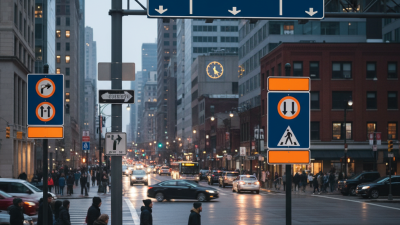
Street signs made from aluminum are not chosen by accident. Their material must survive sunlight, rain, road salt, wind, and constant temperature changes. Aluminum offers a useful balance: it is light enough for crews to handle, yet strong enough for roadside mounting.
“Aluminum gives sign makers durability without creating unnecessary weight,” says Mark H. Johnson, a transportation-sign engineer with more than two decades of fabrication experience. His observation explains why aluminum remains common across municipal and highway projects. However, the material alone does not create a dependable sign. Reflective sheeting, protective coatings, edge finishing, and correct mounting hardware also matter.
Picture a street sign beside a busy intersection. Headlights strike its reflective surface at night. Water runs across its face during a storm. In summer, the panel expands under intense heat, then contracts after sunset. Aluminum handles these repeated stresses better than many heavier or less corrosion-resistant materials.
There is an important limitation, though. Aluminum can bend, dent, or suffer galvanic corrosion when incompatible metals touch it. Poor installation can shorten its useful life. That detail is easy to overlook.
The best street signs made for public roads combine suitable alloy selection, clear lettering, strong reflectivity, and careful maintenance. Their familiar appearance hides a practical engineering decision. Lightweight does not mean weak. And corrosion resistance does not mean maintenance-free. Understanding these trade-offs helps explain why aluminum continues to shape modern street-sign production.
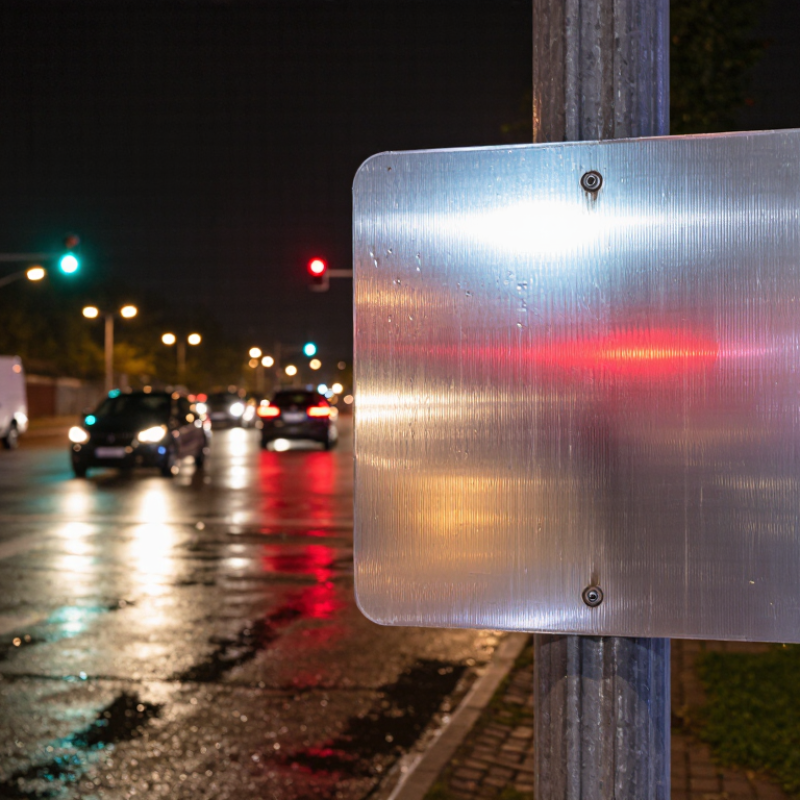
A street-sign blank is the bare panel before lettering, symbols, and reflective sheeting are applied. It may arrive cut to size, with rounded corners and drilled mounting holes. The panel is often aluminum because it resists rain, road salt, and daily temperature changes. It is also light enough for a worker to handle beside a roadway. That practical balance matters.
The specified material, Aluminum 5052-H38, tells us more than “metal.” 5052 is an aluminum-magnesium alloy valued for corrosion resistance and practical fabrication. The H38 temper means the sheet has been strain hardened to a high-strength condition. This treatment improves stiffness and helps the blank keep its shape during installation. However, H38 is not the same as thickness. A thin panel can still flex. The design must account for both. At about 2.70 g/cm³, aluminum is far less dense than steel. Density describes mass per volume, not the finished sign’s total weight.
For example, a 600-by-900-millimeter blank weighs far less than a steel plate of equal size and thickness. In a fabrication shop, I would check alloy, temper, gauge, flatness, and hole placement before printing. Small burrs around a hole can damage reflective film or create a poor fit. Clean edges matter. One detail deserves caution: 2.70 g/cm³ is a convenient nominal value, not a guarantee for every sheet. Supplier records and inspection remain important, especially when sign performance depends on wind, vibration, and long outdoor exposure.
A street-sign blank is the unprinted aluminum sheet cut to the required sign shape before reflective sheeting, lettering, or symbols are applied. Aluminum 5052-H38 is commonly selected for its low density, corrosion resistance, and formability.
Estimated sheet mass is calculated as thickness × density. Using a density of 2.70 g/cm³, each 1.0 mm of Aluminum 5052-H38 contributes approximately 2.70 kg/m² before adding reflective film, ink, mounting hardware, or framing.
Street signs often use aluminum because density directly reduces handling weight. Aluminum has a density of 2.70 g/cm³, while common steel measures about 7.85 g/cm³. These values appear in engineering references from the National Institute of Standards and Technology and ASM Handbook. At the same size and thickness, an aluminum panel weighs roughly 65.6% less than a steel panel. That difference matters when workers lift signs beside roads or mount them on tall posts.
Consider two flat panels with identical dimensions. The steel version weighs nearly three times more. Aluminum also resists atmospheric corrosion through a thin protective oxide layer. Industry data from the International Aluminium Institute reports that aluminum can be repeatedly recycled without losing its basic material properties. That supports long service cycles, although recycling rates for individual signs depend on collection and local processing.
Weight is not the whole design decision. Aluminum has lower stiffness than steel, so a very thin sheet can flex under wind. Engineers may add folds, ribs, thicker edges, or stronger brackets. Those details increase material use. My simple density comparison also ignores fasteners, coatings, holes, and snow loads. Still, the 2.70 versus 7.85 g/cm³ gap remains a practical starting point for sign design. A lighter panel can reduce installation effort, but poor support design can turn that advantage into movement, noise, or premature damage.
Why Are Street Signs Made from Aluminum?
Street signs need to remain readable through rain, heat, snow, and roadside dust. Aluminum offers low weight, practical strength, and useful resistance to outdoor exposure. Installers can handle large sheets without heavy lifting equipment. That matters on busy roads.
ASTM B209 covers aluminum and aluminum-alloy sheet and plate requirements. The standard addresses factors such as alloy, temper, dimensions, and mechanical properties. It does not guarantee unlimited outdoor performance. Design and installation still matter. When aluminum meets oxygen, it quickly develops a thin oxide film. This layer adheres tightly to the surface and slows further oxidation. If a minor scratch exposes fresh metal, oxygen can rebuild the protective film. The repair is quiet and almost invisible.
Moisture alone is usually manageable. Salt spray, trapped water, and industrial pollutants create greater concerns. Contact with dissimilar metals can also encourage galvanic corrosion. Small details become important. Poor drainage may leave dark streaks below fasteners. Abrasive cleaning can damage the surface and reduce its uniform appearance. Field inspections often reveal that edge damage causes more trouble than broad, exposed panels. Rounded edges, suitable fasteners, and clean mounting gaps improve service life. Still, oxide protection is not a perfect shield. Severe coastal exposure may require a carefully selected alloy, finish, or maintenance plan. That limitation deserves attention before anyone treats ASTM B209 sheet as maintenance-free.
Street signs often use aluminum because it is light, corrosion-resistant, and easy to mount. Yet the metal is only the foundation. At night, drivers depend on the sign face, not the panel alone. That face usually includes retroreflective sheeting tested under ASTM D4956. The standard evaluates performance characteristics such as color, durability, and nighttime brightness. Different sheeting types serve different road conditions and sign functions. It is not a shortcut to compliance.
The MUTCD establishes national expectations for sign visibility, legibility, placement, and maintenance in the United States. ASTM D4956 sheeting can support those expectations when the selected type matches the application. A high-intensity face may help a driver read a warning sign from a greater distance. But brightness alone is not enough. Designers must consider sign color, letter height, viewing angle, headlight position, weather, and surrounding lighting. Field crews should inspect fading, peeling, dirt, and damaged edges. Small defects matter.
Field observations often show clean aluminum signs performing poorly when trees hide them or glare washes out the legend. That is the part specifications cannot fully solve. Installation and maintenance deserve equal attention. Agencies should document the sheeting type, installation date, and inspection findings. Records improve consistency and reveal recurring problems. A reflective sign can look excellent at noon and weak after rain. Testing and field judgment should work together. I would not treat any material claim as permanent; road conditions change, and standards are revised.
Aluminum remains a practical choice for street signs because it is light, corrosion-resistant, and easy to shape. Crews can lift a large panel without heavy equipment. That matters beside busy roads, where installation time affects worker exposure and traffic control costs. Its reflective sheeting also bonds well to a clean, prepared surface.
The trade-offs become clearer after years outside. Aluminum bends or dents when struck by debris, vehicles, or careless handling. A deep crease can distort the message and create sharp edges. Thicker panels resist damage better, but they cost more and add weight. Material prices also fluctuate, so a low purchase price does not guarantee a low lifetime cost. I have seen small installation mistakes, such as over-tightened bolts, create stress marks around mounting holes.
Recycling is another benefit, but it is not automatic. Panels may contain reflective films, paint, dirt, and steel hardware. Those attachments must be separated before efficient recycling. Collection systems also differ by region, which weakens the environmental promise in practice. Service life depends on road salt, sunlight, wind, cleaning, and mounting quality. A well-installed sign may remain readable for many years, while one facing harsh weather can fade or loosen sooner. Engineers should inspect the panel, fasteners, and visibility together, rather than judging the metal alone. Aluminum is reliable, but not flawless.