7 Best Traffic Stop Signs for Global Buyers?
Choosing the right traffic stop signs can influence road safety, driver response, and long-term purchasing costs. Global buyers often compare visibility, durability, language, installation, and supplier reliability. A sign may look excellent online but perform poorly under rain, dust, heat, or strong sunlight.
This guide examines seven practical traffic stop signs for international purchasing decisions. Each option deserves attention to reflective sheeting, aluminum or galvanized steel panels, edge finishing, mounting holes, and printing quality. Red backgrounds and white lettering should remain clear at night. Small details matter. From real procurement experience, packaging also affects results. Bent corners, scratched surfaces, and missing brackets can create unnecessary delays.
The best choice depends on location, road conditions, project scale, and applicable local standards. Buyers should request product samples, material specifications, test reports, and installation guidance before confirming large orders. Supplier communication matters too. Clear drawings can prevent costly misunderstandings. Still, no sign is perfect for every market. A highly reflective model may cost more, while a budget sign may fade sooner than expected. That trade-off deserves honest review. Buyers should also verify whether dimensions, symbols, colors, and mounting systems suit the destination authority’s requirements. This article offers a practical comparison, not a universal answer. Careful checking remains essential.

Global Standards: MUTCD R1-1, Vienna Convention B2, and ISO 7010
For global buyers, seven strong stop-sign options should begin with standards, not appearance.
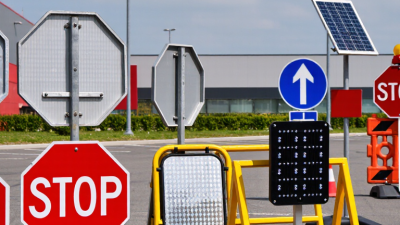
The MUTCD R1-1 sign uses a red octagon, white border, and clear “STOP” legend. Its familiar shape supports recognition in poor weather and at night.
The 2023 Fatality Analysis Reporting System recorded 40,901 traffic deaths in the United States.
Consistent sign placement and visibility remain practical safety controls.
The Vienna Convention B2 sign offers a wider international reference.
It uses the same red octagonal form and supports cross-border driver recognition.
The World Health Organization reported about 1.19 million annual road deaths worldwide in its Global Status Report for Road Safety 2023.
That figure shows why visual consistency matters. ISO 7010 can help with graphical-symbol discipline, but buyers should not treat it as a complete replacement for local traffic regulations. That distinction is easy to miss.
Tips:
Ask for compliance drawings, retroreflectivity test results, corrosion data, and language options. Check the sign at driver eye level, not only in a product photograph. Confirm mounting holes and post compatibility before ordering. A larger sign is not always safer; excessive size can create visual clutter. Standards also evolve, and older specifications may remain in supplier files. Recheck the current national edition. Mistakes happen. Careful review is still cheaper than replacing signs after installation.
Compare Seven Stop-Sign Options Using FHWA’s 750–900 mm Size Classes
Choosing the right stop sign requires more than comparing diameter.
This guide examines seven practical options within the 750–900 mm range:
750, 775, 800, 825, 850, 875, and 900 mm.
These sizes support a clearer purchasing discussion for international buyers using FHWA-based references.
The 750 mm option suits low-speed roads with limited traffic and shorter viewing distances.
At 775 and 800 mm, visibility improves without adding much weight.
The 825 mm size offers a useful middle ground for urban junctions.
An 850 mm sign may perform better where parked vehicles, curves, or wide approaches reduce sight lines.
The 875 mm option adds visual presence.
The 900 mm size is more suitable for high-speed roads, large intersections, or locations needing earlier recognition.
Bigger is not always better.
Check the sign’s material, reflective performance, border accuracy, and mounting holes.
A large panel can create substantial wind pressure. Poles and foundations must match local engineering requirements.
FHWA guidance can inform size selection, but local road authorities may specify different dimensions, colors, or installation heights.
Ask for measured drawings and test documentation before ordering.
I would also compare night photographs, not only daytime samples.
Brightness can look convincing in a catalog, yet perform unevenly after installation.
That detail is easy to miss.atillugu
Check Night Visibility Against EN 12899-1 and Local Luminance Rules
7 Best Traffic Stop Signs for Global Buyers?
Night visibility should guide every stop sign purchase, not just daytime appearance. A bright red face can still look weak under headlights. Buyers should request photometric data for red and white areas, measured at specified observation and entrance angles. Compare those results with EN 12899-1 requirements when the project follows that standard.
Check the actual road environment. A sign near a wet coastal road faces spray, salt, and glare. A rural sign may need stronger retroreflection for longer viewing distances. Ask whether testing covers clean, wet, and aged surfaces. Local authorities may set different luminance, color, size, or mounting rules. EN 12899-1 is useful, but it does not replace destination-country requirements.
Look closely at seven features: compliant retroreflective material, stable red color, clear white legend, rigid substrate, sealed edges, secure mounting holes, and documented durability. Request samples and view them at night from a vehicle, not only under warehouse lighting. Small defects matter.
Do not trust certificates alone.
A practical mistake is choosing the brightest sample without checking glare. Excessive brightness can reduce contrast in some conditions. I would also record the sign’s condition after installation and review it after several months. That feedback is imperfect, but it reveals whether laboratory performance matches real roads. Use an independent testing laboratory when supplier data seems incomplete.
Specify Materials, Wind Loads, and Warranties for Global Procurement
7 Best Traffic Stop Signs for Global Buyers?
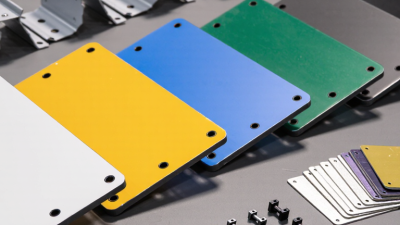
Global buyers should specify the material before comparing prices. Aluminum offers low weight and corrosion resistance, while galvanized steel provides higher stiffness. For coastal roads, request tested corrosion protection, not vague “weatherproof” wording. ASTM D4956 classifies retroreflective sheeting by performance, and the 2023 FHWA MUTCD requires agencies to maintain adequate sign visibility. That matters because the WHO Global Status Report on Road Safety 2023 estimates 1.19 million annual road deaths worldwide.
Wind loads need a project-specific schedule. State the design wind speed, exposure category, sign area, mounting height, and foundation assumptions. EN 12899-1 addresses permanent vertical road signs, while ASCE 7-22 provides widely used wind-load methods. A sign that survives a mild inland site may fail on an exposed coastal route. Small supports can bend first. This detail is often missed.
Warranties should name measurable limits. Specify fading, cracking, delamination, corrosion, and structural failure separately. Ask for test reports, batch traceability, and installation conditions. A ten-year warranty sounds strong, but exclusions may reduce its value. Read the fine print. Procurement teams should also define inspection records and replacement response times. The imperfect part is unavoidable: laboratory results cannot fully predict dust, salt, extreme heat, or poor installation. Independent acceptance testing remains worthwhile.
7 Best Traffic Stop Sign Procurement Profiles for Global Buyers
Material thickness, calculated wind pressure, and warranty requirements for international sourcing.
Wind pressure is calculated from the reference relationship q = 0.613V², where q is pressure in N/m² and V is wind speed in m/s. The values below are screening references only; final sign, pole, fastener, and foundation design must follow the destination country's wind code.
| Profile |
Face Material |
Typical Thickness |
Reflective Face |
Suggested Warranty Requirement |
| 1. Standard Aluminum |
Aluminum |
2.0 mm |
Engineer-grade reflective film |
5 years |
| 2. High-Intensity Aluminum |
Aluminum |
2.0 mm |
High-intensity reflective film |
7 years |
| 3. Heavy-Duty Aluminum |
Aluminum |
3.0 mm |
High-intensity reflective film |
10 years |
| 4. Galvanized Steel |
Galvanized steel |
1.5 mm |
Engineer-grade reflective film |
5 years |
| 5. Reinforced Steel |
Galvanized steel |
2.0 mm |
High-intensity reflective film |
7 years |
| 6. Coastal Aluminum |
Marine-grade aluminum |
2.0 mm |
High-intensity reflective film |
10 years |
| 7. Extreme-Wind Aluminum |
Aluminum |
3.0 mm |
High-intensity reflective film |
10 years |
.png)