What Is a Pedestrian Crossing Sign?
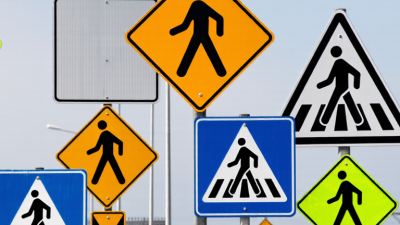
A pedestrian crossing sign alerts drivers to a place where people may cross the road. Its symbol is simple: a walking figure, often shown against a bright background. The message matters most where parked cars, curves, or busy traffic can hide someone stepping toward the curb. Small sign. Serious purpose.
The scale of the risk is clear in global data. The World Health Organization’s Global Status Report on Road Safety 2023 estimates that 1.19 million people die in road crashes each year. It notes that more than half of those killed are pedestrians, cyclists, or motorcyclists. In the United States, the National Highway Traffic Safety Administration recorded 7,522 pedestrian deaths in 2022. These figures do not describe every crossing, but they explain why clear warnings deserve attention.
This guide explains what pedestrian crossing signs mean, what common designs communicate, and where drivers may encounter them. In the United States, the Federal Highway Administration’s Manual on Uniform Traffic Control Devices provides standards for traffic signs and their placement. Local road layouts still vary, so a sign should be read alongside crosswalk markings, signals, and actual street conditions. A sign is not a force field. Faded lettering, glare, or a blocked view can weaken its warning, and drivers may still miss what seems obvious on a map. Understanding the sign is useful; staying alert around people crossing is essential.
Definition and MUTCD Classification: The W11-2 Pedestrian Crossing Sign
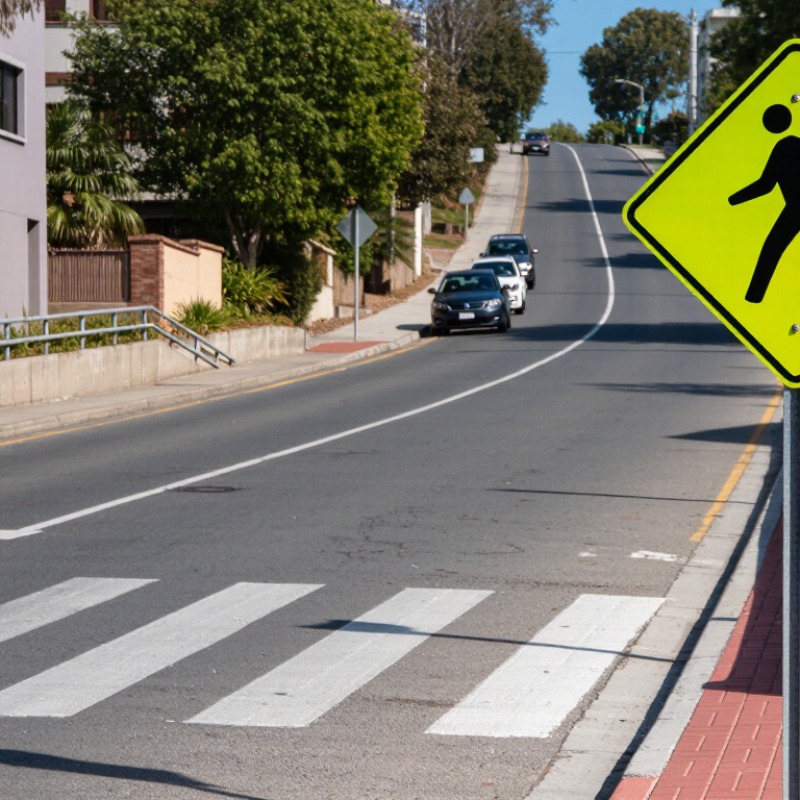
The W11-2 Pedestrian Crossing Sign is a warning sign in the MUTCD’s W11 series. Its familiar diamond shape and walking-person symbol alert drivers that pedestrians may cross nearby. The sign warns; it does not, by itself, mark a crosswalk or establish who has the right of way. That distinction matters when a driver sees the sign before reaching a painted crossing.
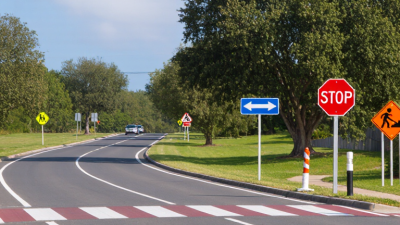
The sign is typically placed where drivers need advance notice, such as near a crossing with limited visibility or a path used by pedestrians. Its location should give drivers time to notice the symbol and respond safely. Consider a bend, parked vehicles, or a crest that hides people at the curb. Small details change what a driver can see. Still, a sign can be overlooked, especially in a crowded streetscape; signs work best alongside clear sightlines and thoughtful crossing design.
Tips: Check the current MUTCD edition and applicable local standards before specifying or installing a sign. Keep branches and other objects from blocking the symbol. Stand where approaching drivers would be, and check whether the sign is easy to spot. It is a simple test, though not a perfect one.
Standard Design: MUTCD W11-2 Shape, Colors, and 30-Inch Minimum Size
What Is a Pedestrian Crossing Sign?
A standard pedestrian crossing warning sign, MUTCD W11-2, uses a diamond-shaped panel. Its black pedestrian symbol stands out against a fluorescent yellow-green background. The bright color helps the sign catch attention near sidewalks, school routes, and marked crossings. Retroreflective material returns light from headlights, making the symbol easier to see after dark. The familiar shape matters: drivers can recognize a warning sign before they read its details.
For a conventional road, the standard minimum size is 30 by 30 inches. That measurement describes the sign panel’s height and width, not the length of its edges. Faster roads or complex locations may call for larger signs. A small panel can look lost beside wide lanes, trees, or parked vehicles. Check the applicable MUTCD edition and local requirements before selecting dimensions; actual visibility can depend on placement and surrounding conditions.
Tips: Measure the panel, then inspect the view from a driver’s approach. Keep branches and other objects clear of the sign. A quick daytime check is useful, but it may miss poor nighttime visibility. That detail is easy to overlook.
Standard design: MUTCD W11-2 is a diamond-shaped warning sign with a pedestrian symbol on a yellow or fluorescent yellow-green background. The minimum sign dimension shown is 30 inches.
How Drivers and Pedestrians Should Respond at Crossings
What Is a Pedestrian Crossing Sign?
How Drivers and Pedestrians Should Respond at Crossings
A pedestrian crossing sign warns drivers that people may cross nearby. Treat it as a cue to slow down, not just another roadside symbol. Ease off the accelerator as you approach, and scan both sidewalks and the road ahead. A person may be waiting behind a parked car or stepping toward the curb. If someone is crossing, give them room and time to reach the other side. Follow traffic signals and road markings, since crossing layouts differ. Avoid passing a vehicle that has stopped near a crossing; someone may be hidden in front of it. Small delays are safer than rushed guesses.
Pedestrians should use the marked crossing when one is available and follow its signals. Wait at the curb, look in both directions, and check that approaching drivers have slowed or stopped before stepping out. Eye contact can help, but it is not a promise that a driver has seen you. Stay alert while crossing, especially when turning traffic is nearby. Put the phone away for a moment. That moment matters. I sometimes think a familiar crossing feels safer than it is; traffic, visibility, and weather can change quickly. Make your next step deliberate, even on a quiet street.
Safety Context: NHTSA Recorded 7,522 U.S. Pedestrian Deaths in 2022
What Is a Pedestrian Crossing Sign?
NHTSA recorded 7,522 pedestrian deaths in the United States in 2022. That figure represents people walking near homes, bus stops, schools, and busy roads. It is a sobering reminder that a painted crosswalk alone cannot make a crossing safe. A pedestrian crossing sign warns drivers that people may cross nearby. Its message matters most where sightlines are limited or traffic moves quickly. Still, a sign cannot guarantee that every driver will see it or stop.
For drivers, the warning calls for slower speeds and a careful scan of both sidewalks and curb edges. A person can step out from behind a parked vehicle in seconds. For pedestrians, the sign marks a place to look for traffic, not proof that vehicles have yielded. Make eye contact when possible, wait for approaching traffic to stop, and keep watching while crossing. Small details matter: rain on a windshield, glare at dusk, or a child’s shorter view between parked cars. It is easy to assume a marked crossing is automatically safe. That assumption deserves a second look.
What Is a Pedestrian Crossing Sign? — Safety Context: NHTSA Recorded 7,522 U.S. Pedestrian Deaths in 2022
A pedestrian crossing sign warns drivers that people may be crossing or entering the roadway. The national fatality figures below provide safety context; they do not measure the effect of any particular sign.
U.S. Pedestrian Traffic Fatalities, 2018–2022
| Year |
Pedestrian fatalities |
Change from previous year |
| 2018 |
6,283 |
— |
| 2019 |
6,205 |
−78 (−1.2%) |
| 2020 |
6,565 |
+360 (+5.8%) |
| 2021 |
7,388 |
+823 (+12.5%) |
| 2022 |
7,522 |
+134 (+1.8%) |
Source: National Highway Traffic Safety Administration (NHTSA), Fatality Analysis Reporting System (FARS), annual pedestrian fatality data. Year-over-year changes are calculated from the figures shown and rounded to one decimal place.