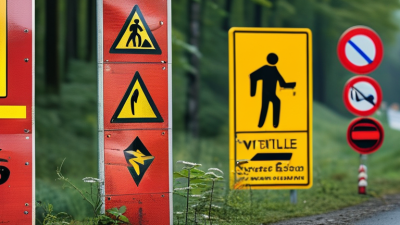
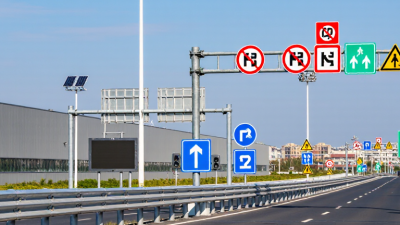
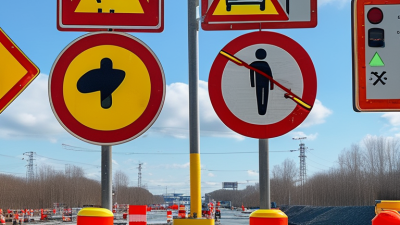
Choosing among the top road signs manufacturers in China requires more than comparing catalog prices. A sign may look impressive online, yet fail under rain, dust, glare, or repeated temperature changes. This guide examines manufacturers through practical details: aluminum thickness, reflective sheeting, color stability, printing precision, mounting hardware, and quality control.
Mark Stoneman, a long-time road-signage consultant, once said, “A sign must be seen before it can be understood.” That simple point deserves attention. Road signs are safety tools, not ordinary printed products. Strong manufacturers test visibility at night, inspect surface finishes closely, and provide traceable production records. They also understand that a warning sign beside a busy highway faces different demands from a small parking sign.
The companies discussed in this article are considered through manufacturing experience, export performance, customization ability, and after-sales support. Certifications may help, but documents alone cannot prove consistent workmanship. Factory photographs can also mislead. A clean showroom is not the whole production story.
Look closer.
The comparison will consider how suppliers handle reflective films, UV exposure, waterproofing, laser cutting, and packaging. It will also ask uncomfortable questions. Can the manufacturer maintain the same color across large orders? Are replacement parts available? Does communication remain reliable after payment?
No supplier is perfect. Even a respected factory may make mistakes in one project. Buyers should request samples, inspect specifications, and confirm testing requirements before ordering. This balanced approach can help road authorities, contractors, and distributors identify dependable Chinese road signs manufacturers for real-world use.
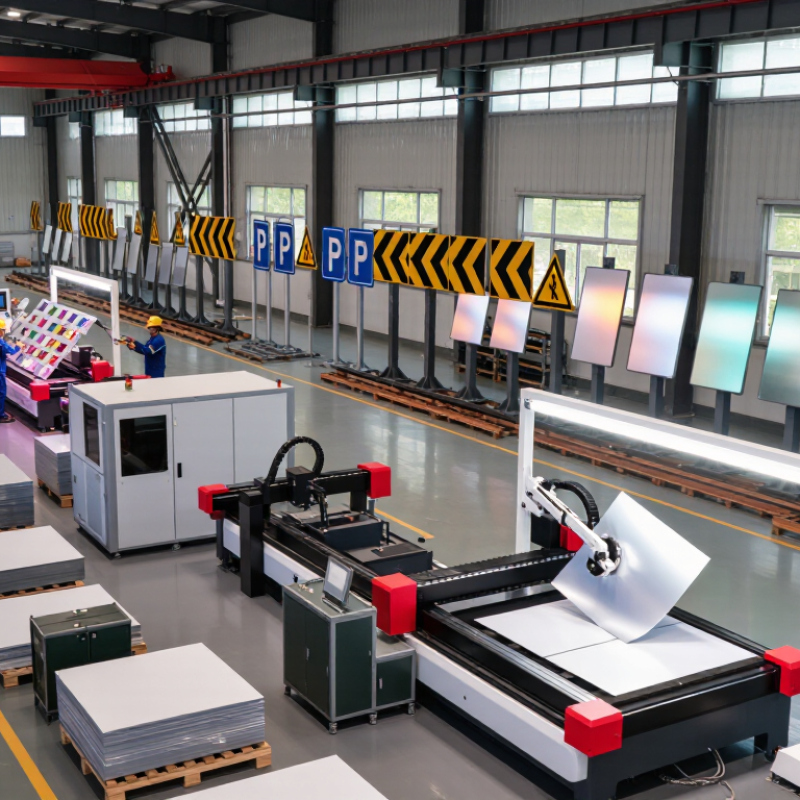
China’s road sign manufacturing industry serves highways, urban streets, construction zones, and industrial parks. Leading manufacturers usually combine metal forming, reflective sheeting, printing, and quality inspection under one production system. Many facilities use aluminum panels because they resist corrosion and remain lightweight during installation. Steel supports are also common where stronger loading performance is required.
Production quality depends on more than appearance. Experienced factories check color accuracy, edge finishing, panel flatness, and reflective performance under headlights. They often use digital printing for detailed symbols and screen printing for stable, repeated designs. Weathering tests can reveal fading, peeling, or cracking before shipment. Small details matter.
Reliable suppliers normally provide material certificates, inspection records, sample approval, and traceable batch information. They should understand local traffic standards and adapt dimensions, languages, mounting holes, and warning symbols accordingly. Export projects may require stricter packaging, salt-spray testing, and documentation. Some manufacturers offer custom engineering support, but not every factory has equal technical depth. A polished sample can hide weak adhesive performance. That deserves attention. Buyers should review production records, inspect random batches, and test signs in realistic outdoor conditions. Manufacturing capacity is useful, yet consistent quality remains harder to prove.
China’s leading road sign manufacturers usually produce regulatory, warning, guide, and temporary traffic signs.
Each type serves a different road situation. Regulatory signs control movement, while warning signs highlight sharp bends, crossings, or construction zones. Guide signs use clear arrows, route numbers, and destination names. Temporary signs need fast installation and stable visibility under dust, rain, and vibration.
Reliable production begins with the correct material and design standard.
Aluminum sheets are common because they resist corrosion and reduce structural weight. Manufacturers should control sheet thickness, surface treatment, printing accuracy, and edge finishing. Retroreflective sheeting must return light clearly at night, even when headlights strike it from an angle. Color, symbol size, font spacing, and mounting height should follow applicable Chinese national and transport-industry standards.
Factory testing also matters. Quality teams often inspect color consistency, adhesion, reflectivity, weather resistance, and wind-load performance. Traceable batch records improve accountability when signs are installed across large highways. In my experience, a bright sign can still fail when its mounting frame is weak or poorly aligned. This detail is often underestimated. Some factories also test samples after heat, moisture, and ultraviolet exposure, but sample testing cannot represent every outdoor condition. Buyers should review production records, inspection reports, material certificates, and installation guidance before selecting a supplier. Specification discipline matters more than attractive product photos.
China’s leading road sign manufacturers serve a vast and demanding transport network. The Ministry of Transport’s 2023 Statistical Bulletin recorded over 5.4 million kilometers of roads nationwide, including more than 180,000 kilometers of expressways. This scale supports strong specialization among domestic producers. Some focus on aluminum signs with high-intensity reflective sheeting. Others manufacture overhead gantries, variable message boards, and solar-powered warning signs for rural routes.
Material control matters. Experienced factories usually test aluminum thickness, coating adhesion, retroreflective performance, and color stability before shipment. Their production also follows requirements in China’s GB 5768 road traffic sign standards. Several suppliers use automated screen printing and computer-controlled cutting, helping maintain consistent symbols across large orders. That consistency is useful at busy junctions, where a small distortion can confuse drivers.
Field conditions expose weaknesses.
A sign may look excellent indoors but lose brightness after years of dust, heat, rain, and ultraviolet exposure. The World Bank has repeatedly linked road safety outcomes with clearer infrastructure and better maintenance, not construction alone. Buyers should therefore inspect sample panels, review photometric test records, and request installation references. One overlooked issue is replacement planning. A low-cost sign can become expensive when its brackets corrode or its reflective film fades early. Chinese manufacturers are improving durability, yet quality still varies between batches. Specification, testing, and site feedback should guide the final decision.
| Manufacturing Specialty | Typical Products | Common Materials | Reflective Technology | Typical Applications | Relevant Standards or References |
|---|---|---|---|---|---|
| Regulatory and Warning Sign Production | Prohibition, warning, mandatory, and information signs | Aluminum sheet, galvanized steel, aluminum composite panels | Engineering-grade, high-intensity-grade, and prismatic reflective sheeting | Urban roads, highways, intersections, school zones, and construction areas | GB 5768.2-2022; GB/T 18833-2012; project-specific road authority requirements |
| Highway Guide Sign Manufacturing | Direction signs, destination signs, route markers, exit signs, and distance signs | Aluminum panels, extruded aluminum profiles, steel support frames | High-intensity and microprismatic reflective materials for long-distance visibility | Expressways, national highways, provincial roads, and interchanges | GB 5768.2-2022; highway design specifications; EN 12899-1 where applicable |
| Large Overhead Sign Systems | Cantilever signs, gantry signs, lane-use signs, and overhead direction boards | Modular aluminum panels, galvanized steel structures, stainless-steel fasteners | High-performance prismatic sheeting and internally illuminated modules | Multi-lane expressways, tunnels, toll plazas, and complex interchanges | GB 5768.2-2022; structural steel and wind-load calculations; EN 12899-1 where specified |
| Temporary and Work-Zone Signage | Temporary warning signs, detour signs, lane-closure boards, and portable signs | Aluminum, galvanized steel, polymer board, folding frames, and weighted bases | Fluorescent reflective sheeting and high-visibility prismatic materials | Road maintenance, utility works, bridge repairs, and emergency traffic control | GB 5768 series; local work-zone traffic-control specifications; ASTM D4956 where required |
| Solar-Powered and LED Signs | Flashing warning signs, speed displays, school-zone signs, and illuminated symbols | Aluminum sign faces, polycarbonate lenses, LED modules, steel poles, and lithium battery systems | Reflective sheeting combined with LED or edge-light illumination | Remote roads, crossings, schools, sharp curves, and locations without grid power | GB 5768.2-2022; IP-rated electrical enclosures; photovoltaic and battery safety requirements |
| Variable Message Sign Systems | LED variable message signs, lane-control signs, speed-limit displays, and traffic information boards | Aluminum cabinets, weather-resistant coatings, LED matrices, control units, and steel gantries | High-brightness LED displays with automatic day/night luminance control | Expressways, tunnels, urban traffic-management systems, and congestion control | Traffic-control system specifications; EMC, ingress-protection, luminance, and reliability requirements |
| Custom Export Sign Manufacturing | Custom language signs, route markers, parking signs, pedestrian signs, and private-road signs | Aluminum, galvanized steel, aluminum composite panels, and UV-resistant coatings | Reflective films selected according to the destination country's visibility requirements | International road projects, logistics parks, parking facilities, and private developments | Destination-country regulations; ASTM D4956, EN 12899-1, or other contract-specified standards |
| Sign Posts and Mounting Hardware | Circular posts, square posts, U-channel posts, brackets, clamps, and foundation accessories | Hot-dip galvanized steel, aluminum, stainless steel, and powder-coated steel | Usually supplied with reflective sign faces; hardware itself is generally non-reflective | Single-post signs, dual-post signs, pedestrian signs, and roadside information systems | Galvanizing requirements; wind-load design; corrosion protection and local installation standards |
Note: Product configuration, material thickness, reflective performance, structural design, and certification requirements should be confirmed against the applicable road authority specifications and the destination market regulations.
When comparing top road sign manufacturers in China, start with evidence, not search rankings. A reliable supplier should show factory photos, production capacity, material specifications, and recent inspection records. Ask whether signs use certified reflective sheeting, corrosion-resistant substrates, and UV-stable inks. Request a sample made to your drawing. Small details matter: edge finishing, bolt holes, color consistency, and readable lettering at night. A polished catalog is not proof.
Evaluate quality through a repeatable process. Confirm incoming-material checks, printing controls, curing times, and final inspection procedures. Ask for test reports from recognized laboratories, but verify the report number and product scope. For aluminum signs, check thickness, flatness, coating adhesion, and resistance to salt spray. For installations, review wind-load calculations and mounting hardware. The supplier should explain tolerances in plain language. Vague answers usually create expensive delays.
Communication is part of quality. Compare response times, technical drawings, packaging plans, and the handling of design changes. Request a pilot order before committing to large volume. Inspect the shipment against approved samples, including dimensions and retroreflectivity. Check export documents, warranty terms, replacement procedures, and realistic production schedules. No checklist is perfect. I would keep a written record of every promise, because memory becomes unreliable during revisions. The lowest quotation may hide thinner material, weaker packaging, or testing gaps. A dependable supplier can discuss these risks without defensiveness.
China’s road sign manufacturers serve highways, city streets, ports, airports, industrial parks, and school zones. Their products include warning signs, direction boards, lane markers, variable message signs, and reflective roadside equipment. In practical projects, buyers usually examine aluminum thickness, coating quality, reflective performance, wind resistance, and mounting accuracy. A bright sign is not enough. It must remain readable after dust, rain, heat, and repeated cleaning.
Export demand is strong across Southeast Asia, the Middle East, Africa, and Latin America. These markets often need signs for rapid road expansion, urban renewal, and logistics development. Chinese suppliers can provide customized languages, symbols, dimensions, and mounting systems. However, each destination follows different visibility rules, testing methods, and installation practices. A factory may meet domestic requirements but still need local certification or independent inspection abroad. This gap is easy to underestimate. Delivery speed also matters, especially for projects with strict construction schedules.
Future growth will depend on safer materials and smarter traffic management. Solar-powered warning units, LED message boards, connected sensors, and energy-efficient lighting are gaining attention. Recycled aluminum and longer-lasting coatings may reduce maintenance costs. Digital systems bring new concerns, including software reliability and data protection. Not every smart feature improves safety. In my view, manufacturers should combine field testing with clearer technical documentation. Some product catalogs still promise more than actual roadside performance. That deserves careful review. Temperature cycles, fading, loose bolts, and poor positioning can reveal weaknesses that laboratory tests miss.