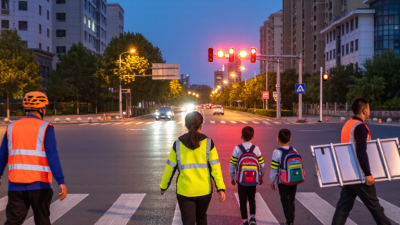
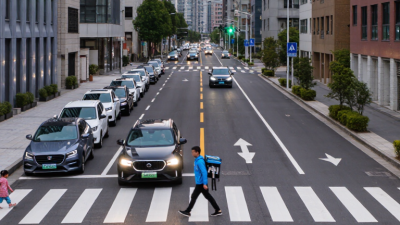
On a rainy evening, a driver may notice a reflective vest before seeing a worker beside the road. That brief moment shows why pedestrian safety depends on visibility and clear movement cues. Visibility matters. China’s market includes reflective apparel, LED warning lights, traffic cones, barriers, and school-zone signs. Each serves a different setting. Some products support temporary road work; others help organize crossings, parking areas, or busy entrances. The best choice depends on who needs protection and where the product will be used.
This article examines leading product categories made and supplied in China, rather than claiming one universal ranking. It considers details buyers can verify, including reflective materials, light output, battery life, weather resistance, installation, and maintenance. A lamp that looks bright indoors may be less useful in rain or glare. Small details matter. Product specifications, sample checks, and clear supplier records can help distinguish dependable options from attractive listings. Independent test reports, when available, offer useful evidence, but do not replace checking a product’s intended use.
Readers will also see how different tools work together. Cones can define a route, barriers can guide movement, and signs can make hazards easier to understand. No product solves every risk. A vest cannot fix poor lighting, and a warning light cannot make an unsafe crossing safe by itself. One limitation deserves attention: online descriptions do not always show real-world performance. Buyers should compare documented features carefully and ask questions when details are missing. The aim is a grounded overview of useful choices, not a promise of perfect protection.
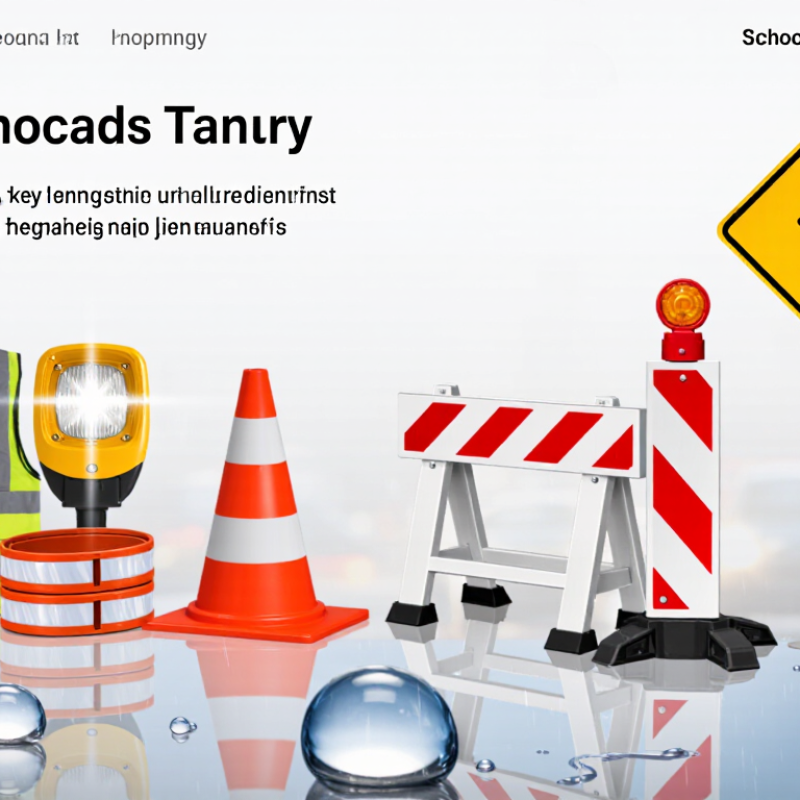
The World Health Organization estimates that road crashes cause 1.19 million deaths worldwide each year. Pedestrians face particular risks where traffic moves quickly, crossings are poorly lit, or drivers cannot see people in time. The number is stark. Each statistic represents a person who may have been walking to school, work, or a nearby shop.
In Chinese cities, useful pedestrian-safety products include bright street lighting, clearly marked crossings, pedestrian signals with visible countdowns, and sturdy barriers near fast-moving traffic. Reflective clothing and bags can help people stand out at dusk, especially on dim streets. These tools work best when they match real street conditions. A barrier placed in the wrong spot may block a safe route instead.
Product choice is only part of the work. Signals need maintenance, crossing markings fade, and lighting can leave dark patches beneath trees or beside parked vehicles. A bright vest cannot fix a badly timed crossing. That is worth remembering. Local road reviews can help identify where children, older adults, and people with limited mobility need clearer routes or more time to cross.
What Are the Top China Pedestrian Safety Products?
Reflective Apparel and Accessories: High-Visibility Clothing Under GB 20653-2020
For pedestrians near traffic, high-visibility clothing helps drivers notice a person sooner, especially in rain, dusk, or poorly lit streets. The World Health Organization’s Global Status Report on Road Safety 2023 estimates that 1.19 million people die in road crashes each year. It reports that pedestrians account for 23% of road traffic deaths worldwide. Visibility is not a substitute for safe roads, but it can support safer journeys.
China’s GB 20653-2020 specifies performance requirements and test methods for high-visibility clothing. It addresses fluorescent background materials, retroreflective materials, and garment design. When choosing apparel, match the garment’s certified class and coverage to the work setting and visibility risks. Check that reflective bands remain visible from several directions, fit securely, and are not hidden by bags or outer layers. Small details matter.
A reflective vest may suit a short walk beside a road, while jackets or trousers can provide more coverage for regular outdoor work. Keep garments clean and inspect seams, closures, and reflective strips for damage; dirt and wear can reduce visibility. Fit matters, too. A vest that rides up or feels uncomfortable may go unworn. That is an easy detail to overlook. GB 20653-2020 supports product assessment, but real-world visibility also depends on lighting, traffic speed, and how people use the clothing.
| Product Type | Typical Use | Visibility Features | GB 20653-2020 Reference | Selection Considerations |
|---|---|---|---|---|
| High-visibility vest | Road work, traffic control, delivery work, and site visits | Fluorescent background material with retroreflective bands; lightweight design worn over other clothing | Choose a garment designed and tested to a declared performance class. Class 1 requires at least 0.14 m² of background material and 0.10 m² of retroreflective material. | Check fit over the intended layers, secure closures, and whether the garment remains visible from the front, back, and sides. |
| High-visibility jacket or coat | Outdoor work in changing weather, including road maintenance and construction | High-visibility panels and retroreflective bands integrated into a long-sleeved garment | Class 2 requires at least 0.50 m² of background material and 0.13 m² of retroreflective material; Class 3 requires at least 0.80 m² and 0.20 m², respectively. | Consider weather protection, breathability, freedom of movement, and whether the design maintains visibility when worn fastened. |
| High-visibility trousers | Roadside tasks and other work where the lower body needs to remain conspicuous | Fluorescent material on the legs, with retroreflective bands arranged for visibility in low light | Garment classification depends on the required visible-material areas and the tested garment design; confirm the class on the product information. | Check that bands are not hidden by boots, tool belts, or other equipment and that the trousers fit without restricting movement. |
| High-visibility coveralls | Full-body workwear for construction, maintenance, and industrial environments | One-piece coverage combining fluorescent material and retroreflective elements across the torso and limbs | Class 3 has the highest minimum material-area requirements shown here: 0.80 m² background material and 0.20 m² retroreflective material. | Verify the class for the complete garment; layering or adding equipment may cover visibility materials. |
| Reflective arm or leg bands | Supplementary visibility for pedestrians, cyclists, or workers | Retroreflective strips that return light toward its source | Accessories alone should not be assumed to meet the requirements for a classified high-visibility garment. | Use as a supplement rather than a substitute for suitable high-visibility clothing when a garment is required. |
| Reflective bag or backpack cover | Supplementary visibility for walking or commuting, especially in low-light conditions | Reflective panels or strips positioned on the back and sides | A bag or cover is not, by itself, a substitute for a GB 20653-2020 compliant garment. | Choose a design that does not obscure reflective areas on clothing and keep reflective surfaces clean and unobstructed. |
Note: GB 20653-2020 specifies performance requirements and test methods for high-visibility clothing. The material-area figures above are minimums for the stated garment classes; confirm the applicable class, test results, and product labeling before purchase. Accessories can add visibility but do not automatically qualify as compliant clothing.
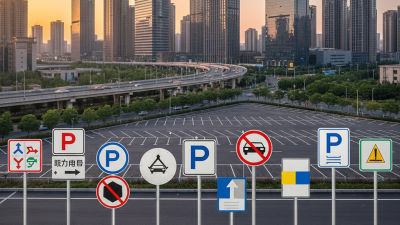
Pedestrian safety depends on clear, consistent information before people reach a crossing. China’s GB 5768.2-2022 covers road traffic signs, including their design, symbols, colors, and use. For a pedestrian crossing, signs should be visible to approaching drivers and placed where they can respond safely. A sign partly hidden by tree branches is not much help.
Crosswalk markings are a related but separate part of the standards framework. GB 5768.2-2022 addresses signs; road markings are covered in Part 3 of GB 5768. Signs and pavement markings should work together, with crossings kept legible and unobstructed. Signalized crossings also need signs and markings that make the intended route easy to understand. Check the applicable standard text and local requirements before selecting dimensions or installation details.
Small details matter. Faded white stripes, worn sign faces, or parked vehicles blocking sightlines can weaken an otherwise well-designed crossing. Maintenance is not glamorous. It is essential. A useful site review looks at the crossing from a driver’s approach and from a pedestrian’s waiting point. Even then, no single sign or marking can fix every visibility problem; each location deserves a careful assessment.
At road crossings, safety depends on how signals, bollards, and barriers work together. Pedestrian signals should be easy to see from the curb, with timing that gives people enough time to cross. Countdown displays can clarify how much crossing time remains. Audible and tactile cues also help people who cannot rely on visual signals alone. Small details matter.
Bollards can help keep vehicles away from waiting areas and crossing approaches. Their spacing should protect pedestrians without narrowing accessible paths or blocking wheelchair users. Barriers can guide foot traffic, reduce sudden entry into vehicle lanes, and organize busy queues. Yet barriers placed without care may obstruct sightlines or create bottlenecks. A tidy plan can still fail when a crowd moves differently than expected.
Tips: Check signal visibility from a seated position and in low light. Walk the route during busy periods, not only when it is empty. Keep access paths clear, and inspect fittings for damage. Test it at dusk. One review may not catch every issue, so adjust placement after observing how people actually use the crossing.
What Are the Top China Pedestrian Safety Products?
Speed-Reduction Products: Why They Matter When Pedestrians Account for 21% of Global Road Deaths
A 21% share is a serious warning, though estimates vary by year and method. The World Health Organization’s Global Status Report on Road Safety 2023 attributes about 23% of global road deaths to pedestrians. Speed matters: WHO guidance reports that a pedestrian struck at 50 km/h faces about 4.5 times the fatality risk of one struck at 30 km/h. The difference can be decisive on a neighborhood street or near a school gate.
Speed-reduction products help make lower speeds part of the street design, not just a posted limit. Raised crossings, speed tables, speed humps, and curb extensions can slow vehicles and shorten pedestrian crossing distances. Chicanes can also make drivers reduce speed through a winding path. Small details matter. A poorly placed hump may cause discomfort, affect drainage, or complicate emergency access. A raised crossing needs clear markings and a level, accessible route for people using wheelchairs or strollers. WHO’s speed-management guidance supports matching measures to local conditions and monitoring their effects. A device alone is not a safety plan. Cities should check vehicle speeds, pedestrian visibility, and crash patterns after installation—and revise designs when the street tells them something was missed.
Safe System speed limits vary by road context. This chart shows international benchmarks relevant to speed-reduction measures such as raised crossings, speed humps, and traffic-calming features.
How to read this: Lower limits are recommended where vulnerable road users mix with motor traffic or collision forces could be severe. Note: the headline uses 21%, but WHO reports that pedestrians made up approximately 23% of global road traffic deaths in 2021.
Sources: WHO, Global Status Report on Road Safety 2023; WHO and UN road safety guidance on Safe System speed limits. Speeds shown are guidance benchmarks, not measured product effects.