Choosing traffic safety products for global sourcing requires more than comparing prices and catalog photos. A reflective vest may look identical across suppliers, yet fabric brightness, stitching, sizing, and wash resistance can differ sharply. The same concern applies to cones, barriers, warning lights, road studs, and temporary signs.
Experienced buyers begin with the road environment. Consider climate, visibility, traffic speed, installation time, and expected product exposure. Request technical datasheets, test reports, material specifications, and clear product photographs. Independent testing can confirm retroreflectivity, impact resistance, electrical safety, or weather performance. Supplier audits also matter. A polished website is not proof of consistent production.
Requirements vary between countries and project owners. Confirm applicable standards, labeling rules, import documents, and language requirements before placing an order. Ask suppliers how they control batches and handle defects. Keep samples from approved production runs for comparison. Small details matter, such as a cone’s base weight or a lamp’s battery compartment seal.
A low price can hide replacement costs. That assumption can fail.
Reliable sourcing also depends on communication. Record agreed tolerances, packaging, inspection methods, and delivery terms in writing. Use pre-shipment inspections for larger orders, especially when products protect workers or guide vehicles. No checklist is flawless. Field feedback may reveal glare, weak fasteners, or confusing instructions after deployment. Treat those findings seriously, update specifications, and improve the next purchase. Safety is not a single transaction. It is a continuing quality decision.

How to Choose Traffic Safety Products for Global Sourcing
Define the Traffic Safety Needs and Sourcing Objectives
Effective global sourcing starts with a clear traffic safety need. A highway work zone needs different products than a school entrance. Map the location, road speed, weather, visibility, and expected user behavior. Observe the site during daylight and poor weather. Small details matter. A temporary barrier may face strong wind, heavy rain, or repeated vehicle contact.
Set measurable objectives before contacting suppliers. Define required visibility, impact performance, service life, installation time, and target cost. Include packaging dimensions and replacement needs. These details prevent unsuitable quotations. They also help purchasing teams compare products fairly.
Local conditions can change the specification. Check applicable road authority requirements, test methods, labeling rules, and import documents for each destination. Do not rely only on a supplier’s general compliance statement. Request recent test reports, material information, inspection records, and product samples. Independent verification may be necessary for critical applications.
My first sourcing plans often focused too heavily on unit price. That was a mistake. A cheaper cone can become expensive after fading, cracking, or frequent replacement. Review supplier experience, production controls, quality checks, and response times. Ask how defects are handled. Keep written records of every requirement and approval. Even then, the plan may need adjustment after a field trial. That is useful evidence, not failure.
| Traffic Safety Need | Recommended Product Category | Key Technical Requirements | Relevant Standard or Reference | Sourcing Objective | Acceptance Data to Verify | Typical Deployment Environment |
|---|---|---|---|---|---|---|
| Improve driver recognition of permanent hazards | Permanent reflective traffic signs | Retroreflective sheeting; aluminum or galvanized steel substrate; corrosion-resistant finish; legible symbols and text; suitable wind-load design | EN 12899-1; ASTM D4956; applicable national sign regulations | Obtain consistent nighttime visibility and documented regulatory conformity | Photometric performance; color coordinates; coating thickness; substrate thickness; dimensional tolerance; test reports | Urban roads, rural roads, intersections, work-zone approaches |
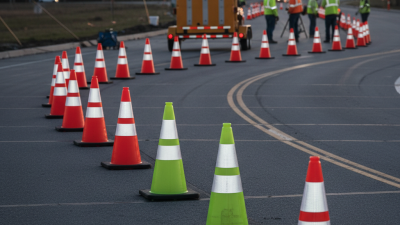
| Protect workers and road users during temporary works | Traffic cones, delineator posts and channelizing devices | High-visibility color; stable base; flexible construction; resistance to impact, ultraviolet exposure and temperature changes; stackable design | EN 13422; applicable road authority specifications; local work-zone manuals | Reduce setup time, replacement frequency and transport volume | Product height and mass; base dimensions; rebound or impact test; color and retroreflection test; stacking ratio | Lane closures, utility works, construction zones and maintenance sites |
| Provide clear warnings in low-light or night conditions | Flashing warning lights and road hazard beacons | Specified flash pattern; adequate luminous intensity; weather-resistant enclosure; low-voltage power supply; visible battery status; secure mounting | EN 12352; applicable electrical-safety and electromagnetic-compatibility requirements | Balance visibility, operating time, energy consumption and maintenance effort | Luminous intensity; flash frequency; ingress-protection rating; battery capacity; operating hours; charging-cycle data | Roadside hazards, emergency response areas, tunnels and temporary traffic control |
| Separate traffic streams and guide vehicle movement | Water-filled barriers, pedestrian barriers and lane separators | Interlocking system; stable footprint; high-visibility surface; controlled deflection; drainage and handling provisions | Applicable EN 1317 requirements where vehicle restraint performance is claimed; local work-zone specifications | Select the lowest-complexity system that meets the required containment and pedestrian-control function | Barrier length and mass; ballast capacity; connection strength; stability test; impact or containment test where applicable | Roadworks, event traffic management, pedestrian diversions and temporary lane separation |
| Protect vehicles from roadside hazards | Vehicle restraint systems and crash cushions | Declared containment level; working width; impact severity; transition compatibility; anchorage and installation requirements | EN 1317 series; applicable national road restraint regulations | Purchase a tested, compatible system rather than evaluating components in isolation | Crash-test classification; working width; impact severity level; installation drawings; approved components; maintenance instructions | Motorways, bridges, medians, embankments and fixed roadside obstacles |
| Maintain visibility of vulnerable road users | Pedestrian crossing signs, school-zone signs and high-visibility markings | High contrast; retroreflective or fluorescent materials where permitted; slip-resistant marking surface; clear pictograms | Applicable national traffic-sign regulations; ASTM D4956 for reflective sheeting where adopted | Improve recognition without creating misleading or non-compliant road information | Luminance or retroreflectivity; skid resistance for pavement markings; adhesion; abrasion resistance; color stability | School areas, pedestrian crossings, transit stops and high-footfall urban locations |
| Support rapid deployment during incidents | Portable signs, folding barriers and emergency traffic-control kits | Compact storage; tool-free setup; low handling risk; reflective faces; secure locking mechanism; weather-resistant materials | Applicable national temporary traffic-control requirements and road authority guidance | Minimize response time while preserving visibility and stability | Packed dimensions; deployment time; total kit mass; locking-cycle test; visibility test; carrying-handle strength | Accident scenes, disaster response, roadside maintenance and short-duration closures |
| Control access to restricted or hazardous areas | Safety fencing, pedestrian gates and temporary access-control systems | Adequate height and opening control; anti-tamper connections; stable feet; corrosion resistance; smooth edges | Applicable occupational-safety, public-space and temporary-works requirements | Combine reliable access control with fast installation, reuse and simple inspection | Panel dimensions; mesh aperture; base stability; connection strength; coating or corrosion test; edge inspection | Construction sites, utility corridors, public events and damaged-infrastructure zones |
| Build a reliable and auditable global supply program | All traffic safety product categories | Traceable materials; controlled specifications; multilingual documentation; repeatable inspection plan; packaging suitable for international transport | ISO 9001 quality-management principles; ISO 39001 road-traffic-safety framework; destination-market regulations | Reduce compliance risk, total landed cost, defects and supply interruptions | Pre-production sample approval; batch traceability; inspection records; packaging test; lead time; defect rate; corrective-action process | Multi-country procurement, distributor networks, infrastructure projects and public-sector tenders |
Note: The applicable standard depends on the destination country, road authority and intended use. Product claims should be verified against current regulations, test reports, installation conditions and project-specific specifications before purchase.
When sourcing traffic safety products globally, begin with the destination market. Regulations can differ by country, road type, and installation environment. A reflective barrier accepted in one region may require different testing elsewhere. Check national transport rules, workplace requirements, and municipal specifications before requesting quotations. Paperwork can mislead.
Ask suppliers to identify the exact standards used for design, materials, visibility, impact resistance, and weather performance. Request current test reports, certification numbers, laboratory details, and product traceability records. Confirm that reports match the offered model, dimensions, colors, and production materials. Test evidence matters. A certificate is not proof of every claim.
Experienced buyers also review factory quality controls. Inspect incoming materials, batch records, calibration logs, and final inspection procedures. Independent pre-shipment testing can reveal weak reflectivity or brittle plastic before delivery. We have learned to verify certification directly with the issuing body, not only through scanned documents. Standards may change while old certificates remain online. Ask who monitors updates and who accepts responsibility for compliance. This process is not flawless. Local interpretation can still create delays, especially when translated documents use unclear technical terms. Keep written confirmation from the importer, testing laboratory, or relevant authority before placing a large order. Select products with documented conformity, consistent manufacturing, and evidence suited to the actual road conditions.
Global sourcing begins with visibility, not the lowest unit price. NHTSA’s Traffic Safety Facts reported 7,522 pedestrian deaths in the United States in 2022. That figure makes material selection a safety decision. Fluorescent yellow-green fabric performs well in daylight, while retroreflective tape returns vehicle headlights at night. They solve different problems. A supplier offering only one is incomplete.
Compare PVC, TPU, polyethylene, aluminum, and coated fabrics against the working environment. TPU usually bends better in cold conditions, while rigid PVC can crack after repeated impact. Aluminum signs resist weather, but their edges and mounting points need careful inspection. Check UV exposure, abrasion, water absorption, tensile strength, and temperature cycling. EN ISO 20471 and ANSI/ISEA 107 help evaluate high-visibility apparel; ASTM D4956 supports retroreflective sheeting comparisons. Certification alone is not enough. Request independent test reports and recent batch records.
The WHO Global Status Report on Road Safety 2023 estimates 1.19 million annual road deaths worldwide. Visibility deserves measurable evidence. Compare luminance, coefficient of retroreflection, color retention, and nighttime viewing distance. Inspect samples after folding, washing, and simulated sunlight. Some products look bright in a warehouse but fade quickly outdoors. That mistake is common. I would also test stitching, adhesive strength, and packaging damage before placing a large order. A cheaper product may become expensive when replacement rates, missed deliveries, and field failures are included. No material wins everywhere. The location, climate, traffic speed, and maintenance schedule must shape the decision.
Comparative planning index for commonly used traffic-safety materials. Scores from 0 to 100 represent relative suitability based on impact behavior, environmental durability, daytime conspicuity, and compatibility with reflective treatments. Actual performance depends on product design, manufacturing quality, climate, and applicable standards.
HDPE is lightweight and impact-resistant, rubber provides strong flexibility and energy absorption, galvanized steel offers high structural durability, and aluminum combines low weight with corrosion resistance. For night visibility, approved retroreflective sheeting and compliant color specifications should be evaluated separately.
Global sourcing traffic safety products requires more than comparing unit prices. A supplier should explain material grades, production limits, and inspection records. Ask for recent test reports, not polished promises. During factory visits, inspect reflective sheeting, molds, stitching lines, and storage areas. Dust and poor labeling often reveal weak process discipline. I have learned that a clean showroom proves very little.
Manufacturing capacity must match your delivery schedule and seasonal demand. Request monthly output, equipment lists, shift patterns, and subcontracting details. Compare stated capacity with actual machine counts and trained operators. A supplier producing 50,000 cones monthly may struggle when orders double. Ask how it handles damaged batches, power interruptions, and urgent revisions. Their answers show operational maturity. Capacity claims need evidence.
Quality controls should be visible at every stage. Use approved samples, written specifications, incoming-material checks, in-process measurements, and final inspections. For signs, measure color, dimensions, edge finishing, and reflective performance. For garments, examine seam strength, visibility panels, and wash durability. Keep inspection photos and batch numbers linked to shipping documents. Independent pre-shipment checks can reduce surprises, but they cannot repair a weak process. I still allow room for human error. A checklist may miss a recurring defect if nobody studies the pattern. Review nonconformities with the supplier, set corrective deadlines, and verify the next production run.
A low unit price can be misleading. Review the full landed cost, including packaging, freight, duties, inspection, and local storage. A sign that saves two dollars may require stronger cartons after arriving damaged. Request a detailed quotation with product dimensions, pallet quantities, replacement terms, and delivery estimates. Confirm destination standards before ordering. Requirements for reflectivity, color, visibility, and materials can vary between markets.
Logistics should match the installation site. Check whether products fit standard pallets, narrow roads, or limited storage rooms. Installation also affects real cost. Examine mounting holes, bolt sizes, surface preparation, and required tools. Clear instructions reduce labor delays.
Still, instructions are sometimes too general. Test one sample with local installers before approving a large shipment. Long-term support matters as much as the first delivery. Ask about spare parts, technical documents, warranty handling, and replacement availability. Keep records of batch numbers and inspection results.
Tips: Compare three cost scenarios: best case, delayed shipment, and damaged goods. Ask suppliers to show packaging photos and installation drawings. Measure one complete unit, not only the catalog dimensions. Leave room for repair stock. A small reserve can prevent a road crew from waiting weeks. Recheck assumptions after the pilot installation. That step is easy to skip.